
Custom Rugs – How To Get A Rug Made To Your Exact Size And Design

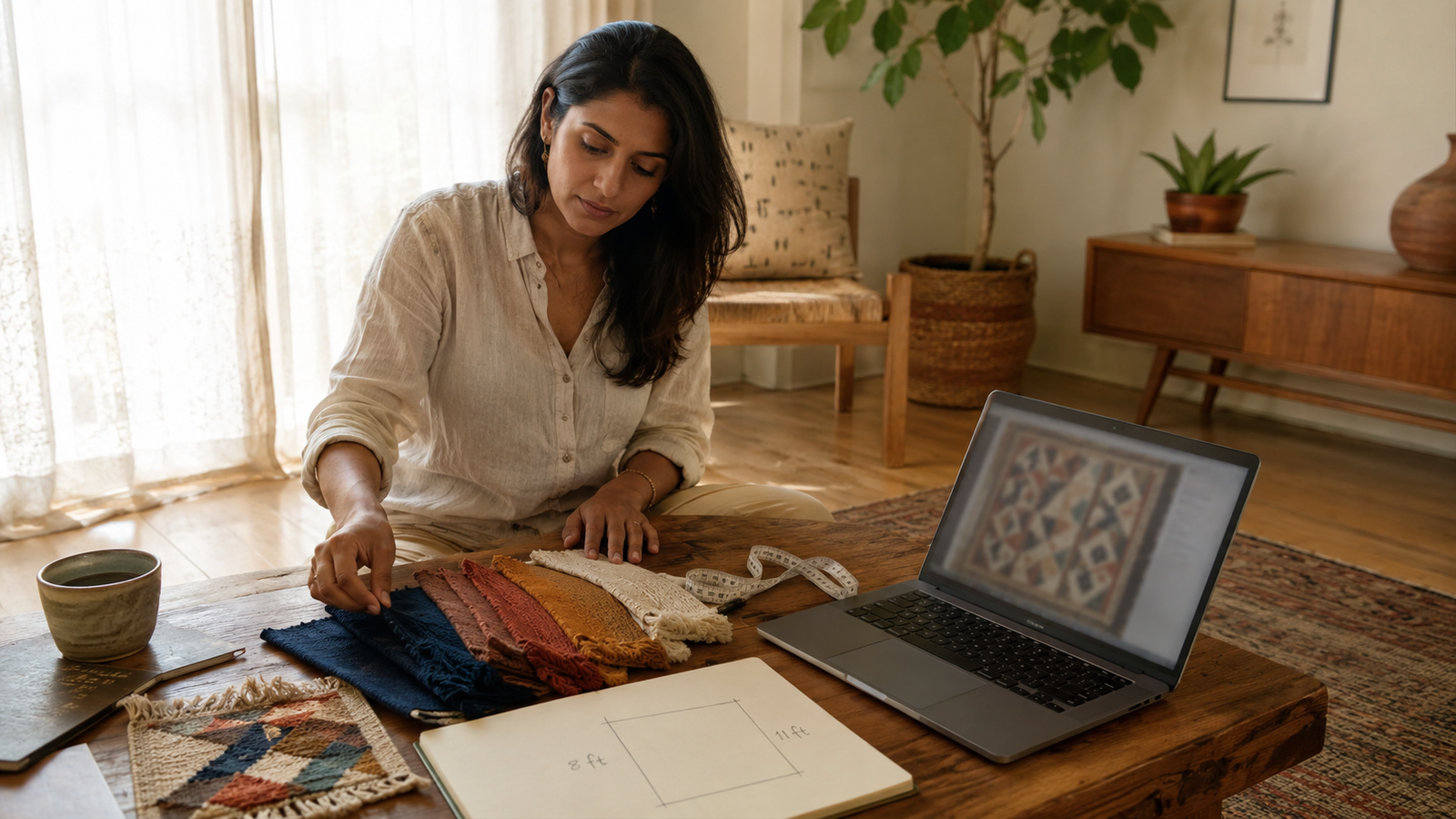
Standard rug sizes exist for a reason. Most rooms, most furniture arrangements, most floor plans fall into a predictable range, and a 6x9 or 8x10 covers a lot of ground.
Then there are the rooms that don't fit anything on a size chart. An awkward L-shaped living room. A landing at the top of a staircase that's 4.5 feet wide and 11 feet long. A heritage home with door frames and alcoves built to proportions nobody uses anymore. For these spaces, a standard rug is always a compromise, too big, too small, or the right size but the wrong colour for the room you've already designed around.
This is what custom rug ordering solves. And it's a more accessible process than most people assume.
What "Custom" Actually Means
Custom doesn't mean picking from a slightly expanded catalogue. It means specifying the rug from scratch: size, material, colour, and often pattern and having it woven to that exact specification by a weaver, rather than selecting from what's already been made.
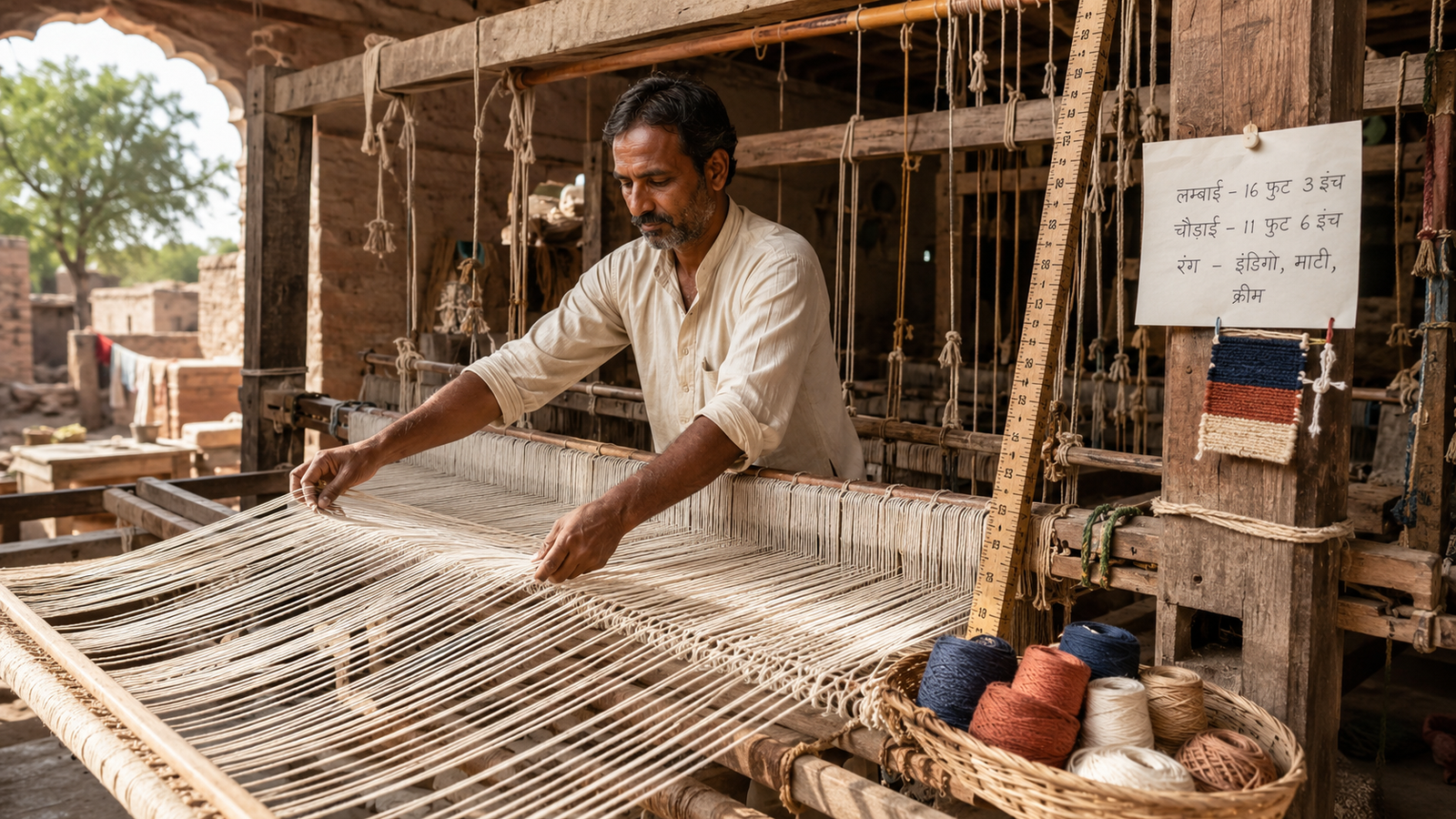
For a handmade flatweave rug, this is genuinely straightforward in a way it isn't for machine-made carpets. A power loom is set up for specific production runs and standard widths. A weaver on a traditional pit loom can adjust the warp setup to produce almost any size within the loom's physical width capacity. The flexibility is built into the craft itself.
This is different from a made-to-order furniture piece assembled from modular parts. A custom dhurrie is woven as one continuous piece, row by row, to your specification, the same way a standard-size rug is made, just dimensioned differently.
What You Can Actually Customise
Size. This is the most common reason people order custom. Length and width can be specified to the inch, within the practical limits of loom width and weaver capability. Unusual proportions like long narrow runners, near-square dimensions, oversized pieces beyond standard production sizes everything is achievable.
Material. Cotton, wool, jute, silk blends, or combinations. If you want the durability of wool with the lighter feel of cotton, a wool-cotton blend can be specified at a particular ratio. Browse the natural fibre options to understand which material suits your room before deciding.
Colour. Working from a swatch, a paint sample, or even a photograph of your room, weavers can match or approximate specific colourways using natural or natural-style dyes. Exact colour matching has some natural variation, handmade dye work isn't a Pantone-precise process but close, harmonious matches are very achievable.
Pattern density and scale. A traditional geometric pattern can be scaled up or down depending on the rug's size. A diamond lattice that looks proportional on a 5x7 might need adjustment to look right at 9x12. This is something worth discussing directly with whoever is taking your custom order, because pattern scaling isn't always intuitive from a small swatch image.
Border treatment. Some patterns work better with a defined border; others work as an all-over field with no border at all. This is a design decision worth making deliberately rather than defaulting to whatever the reference image showed.
The Custom Ordering Process: Step By Step
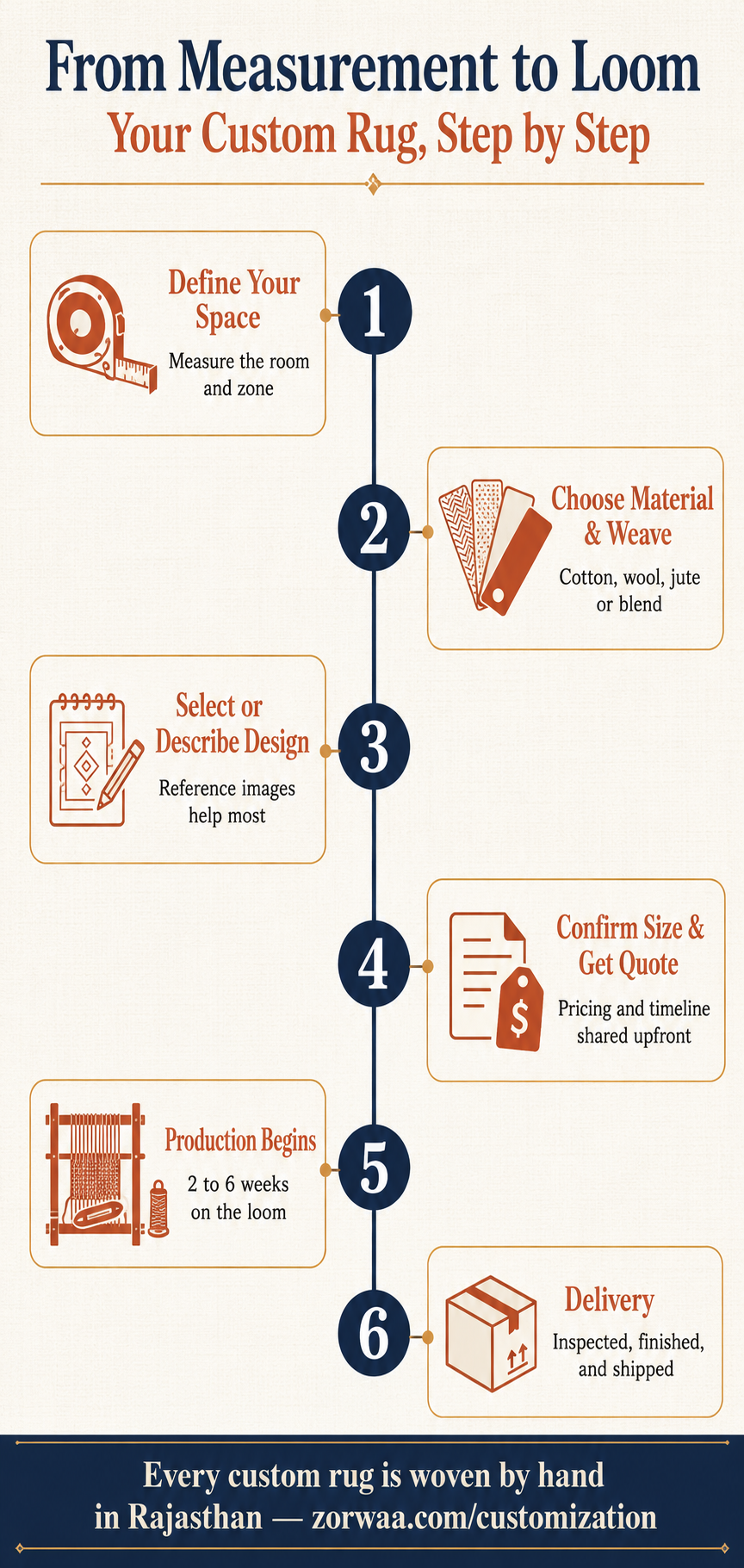
1. Define your space
Measure the room and the zone the rug needs to cover. If you're not sure how, our guide on choosing the right rug size for every room walks through the sizing logic for living rooms, dining rooms, bedrooms, and corridors. Getting this right before you order saves a round of back-and-forth later.
2. Choose your material and weave type
Decide between a flatweave dhurrie or a pile rug, and pick your fibre cotton, wool, jute, or a blend. This decision affects both the final feel of the rug and the production timeline, since some materials and weave types take longer to produce than others.
3. Select or describe your design
You can choose from an existing pattern and have it rescaled or recoloured to your specification, or describe a design you have in mind. Reference images, a photo of a rug you liked, a colour palette from your room, even a rough sketch genuinely help here. Weavers work better from concrete references than abstract descriptions.
4. Confirm size and get a quote
Once size, material, and design are settled, you'll receive a quote and an estimated production timeline. Custom pricing typically runs slightly higher than equivalent standard-size pieces, reflecting the dedicated loom setup and the fact that a custom rug can't be produced as part of a batch run.
5. Production
This is where the actual weaving happens. Depending on size and complexity, a custom flatweave rug typically takes two to six weeks to complete. A large, intricately patterned piece can take longer. This isn't a process that can be meaningfully rushed, the weaving speed is roughly fixed by the technique itself, not by how many people are working on it.
6. Delivery
Once complete, the rug is finished, inspected, and shipped. For international orders, factor in additional transit time on top of production.
How Long Does It Actually Take?
This is the question people ask most often, and the honest answer is: it depends on size and complexity, but plan for several weeks minimum.
A small custom dhurrie, a runner or an accent piece can sometimes be completed in two to three weeks. A large room-sized custom rug with a detailed pattern can take six weeks or more. If you have a fixed deadline, a move-in date, an event, a renovation completion, communicate that upfront. Most weavers and workshops can work toward a deadline, but they need to know about it at the start, not two weeks before you need the rug.
This is also the main argument for ordering custom early rather than waiting until the last possible moment. A rug that takes a month to make doesn't compress into a week of urgency just because you need it sooner.
Is Custom Worth The Extra Cost?
For a standard-sized room with conventional proportions, probably not, a well-made standard rug will do the job, and there's no reason to pay a premium for flexibility you don't need.
For an unusual space, a specific design vision, or a room you've already invested significant thought into, custom is usually worth it. The alternative is buying a standard rug that's slightly wrong, then living with that compromise for years, or replacing it once the wrongness becomes too noticeable often costs more in the long run than getting it right the first time.
There's also a category of buyer who simply wants something nobody else has. A custom rug, woven to your specification by an individual weaver, is genuinely one of one. That's not a small thing if it matters to you.
What Makes Zorwaa's Custom Process Different
Every handmade rug at Zorwaa, custom or standard, is woven directly by artisan families in Bishnoi Village and Salawas near Jodhpur. When you order custom, you're working directly with the same weavers who make the standard collection not a separate production line, not a different tier of quality.
We work with you on size, material, and design before the loom is set up, so there's clarity on what's being made and roughly how long it will take before any weaving begins. If you're ready to start, the customisation page is where the conversation begins, fill in your requirements and our team will follow up within 24 hours with next steps and a quote.
Frequently Asked Questions
What is the minimum order size for a custom rug?
There’s no strict minimum, small accent pieces and runners can be custom-ordered just as easily as room-sized rugs. The economics simply work out differently at small sizes, since the loom setup cost is a larger proportion of a smaller rug’s total price.
Can I get an exact colour match to my existing decor?
Close matches are very achievable using natural or natural-style dyes, working from a swatch, paint sample, or photograph. Exact digital colour matching isn’t realistic with hand-dyed yarn, there’s always some natural variation but a harmonious, intentional match is the standard outcome.
How much more does a custom rug cost compared to a standard size?
It varies by size and complexity, but expect a modest premium over an equivalent standard piece. The increase reflects dedicated loom setup rather than batch production, not a markup for the word “custom.”
Can I order a custom rug in an unusual shape, not just rectangular?
Yes, within reason. Rounds, runners with non-standard proportions, and rugs designed to fit specific architectural features are all possible on a flatweave loom. Discuss the shape directly during the ordering process so the weaver can confirm feasibility before production starts.
What happens if I'm not happy with the finished custom rug?
This is worth discussing directly with the seller before ordering, since custom return policies typically differ from standard product returns since a custom piece can’t simply be resold to another buyer the way a standard rug can. Clarify this upfront so there are no surprises.
One thought on “Custom Rugs – How To Get A Rug Made To Your Exact Size And Design”
Comments are closed.