

Monsoon Rug Care in India: Protecting Handmade Dhurries from Mould and Moisture

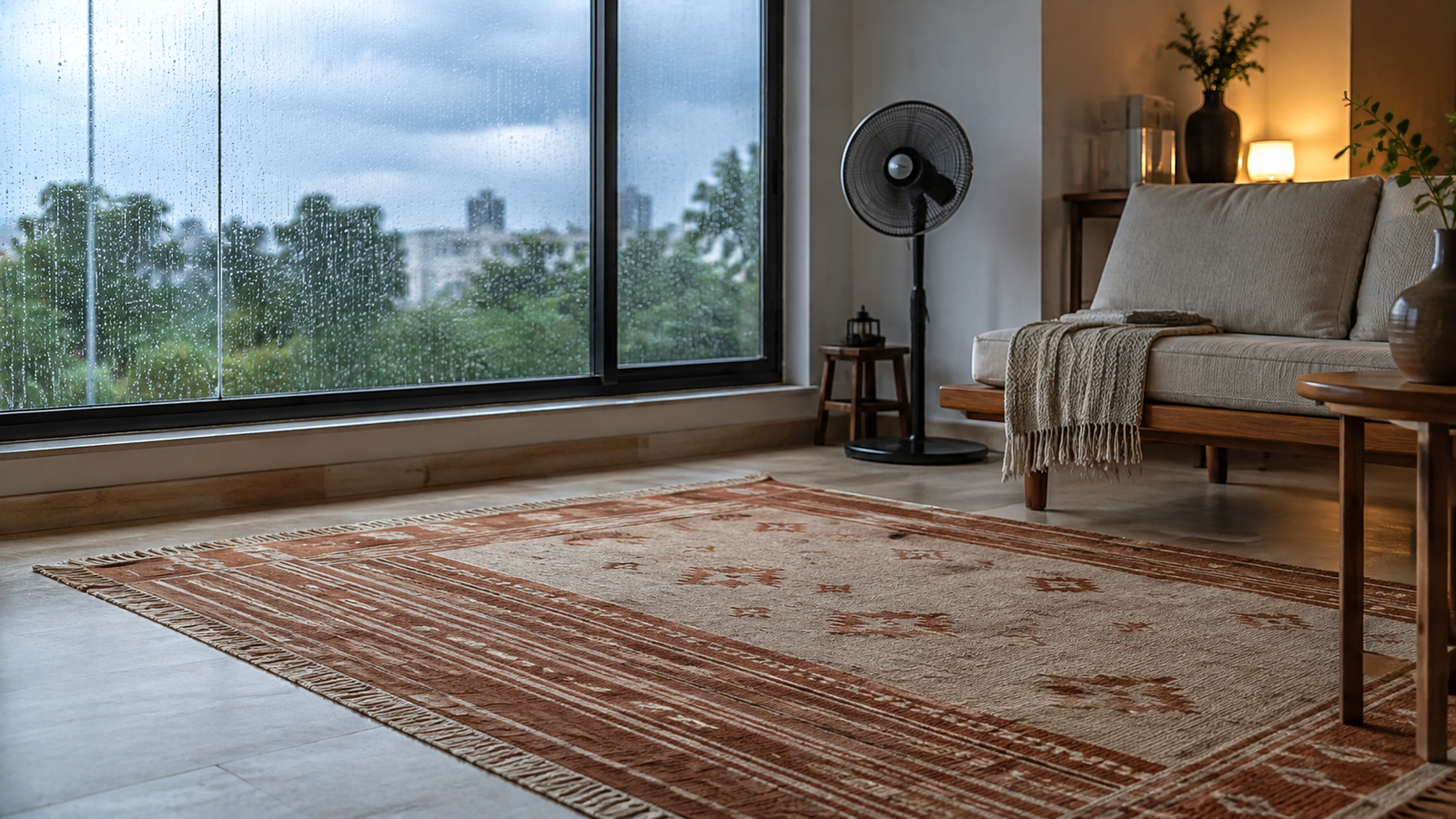
Monsoon is the toughest season of the year for a handmade rug in India, and if you live anywhere with a proper rainy season, you already know the smell. That faint mustiness that shows up sometime in July and doesn't fully go away until October. Good monsoon rug care isn't about reacting once you notice it, it's about a handful of habits that keep moisture from settling into the weave in the first place. This matters more for rugs than almost anything else in a home, since a rug sits directly on the floor where humidity, spills and tracked-in rain collect first. The good news is that flatweave dhurries are naturally better equipped for this season than a thick pile rug, and the habits that protect them are simple enough to actually stick to for four months straight.
Table of Contents
Why Monsoon Is Hard On Rugs
Mould needs three things to grow: moisture, warmth and time. Indian monsoon delivers all three at once. Humidity in coastal and central cities regularly climbs past 80 percent between June and September, well above the 60 percent mark where fabric starts holding onto moisture rather than releasing it. Mould can begin forming within 24 to 48 hours of a rug staying damp, faster than most people expect.
A rug picks up moisture in more ways than rain alone. Wet shoes at the door, an open window during a sudden downpour, condensation from an AC unit, even the floor itself in older homes with poor ventilation, all of it ends up in the weave eventually. None of this means your rug is fragile. It just means monsoon calls for a slightly different routine than the rest of the year.
Why Flatweave Dhurries Handle Monsoon Better Than Pile Rugs
Construction matters as much as the season here. A tufted or knotted pile rug usually sits on a separate backing or padding layer, and that layer holds onto moisture far longer than the visible surface does, which is exactly why a rug can feel dry on top while staying damp and mould-prone underneath for days. Flatweave dhurries don't have that hidden layer. There's no backing and no padding, just yarn woven directly into a single flat structure, so there's nowhere for trapped moisture to hide. They're also fully reversible, which means you can flip one over to air out both sides evenly, something a pile rug simply can't do.
Fibre matters too. Jute is the most absorbent of the natural fibres Zorwaa works with, wonderfully breathable most of the year, but it needs the most attention during monsoon specifically, keep jute rugs away from window sills and damp corners more strictly than you would a wool piece. Wool carries a small amount of natural water resistance from its own lanolin content, so it tends to handle the odd damp day a little better. Cotton sits in between, it absorbs moisture readily but also dries fast once air reaches it. None of the three are monsoon-proof on their own. Construction and daily habits matter more than fibre choice alone. For the full comparison of how the three behave across the whole year, not just monsoon, our wool, cotton and jute guide covers it in depth.
Where Rugs Get Into Trouble During Monsoon
A handful of spots cause most of the damage, and they're worth checking specifically once the rains start.
Window sills, and any rug within splash distance of an open window, catch rain more often than people notice, especially during sudden afternoon downpours. Entryways take a beating from wet shoes, dripping umbrellas and puddled water tracked in before anyone's had a chance to towel off. Rugs pushed up against an exterior wall are sitting next to the dampest surface in the house, older walls especially can sweat moisture inward during heavy humidity. And stone or marble flooring, common across a lot of Indian homes, genuinely sweats in high humidity, leaving a rug resting on a slightly damp surface even when nothing has actually spilled.
None of this needs a full room rearrangement to fix. Most of it comes down to a few inches of clearance and a bit of attention during the wettest weeks.
Simple Monsoon Habits That Make The Biggest Difference
A few habits, kept up consistently for the season, do more than any single deep clean.
- Keep windows closed during heavy rain and open them again once it passes, for airflow rather than moisture
- Leave wet shoes and umbrellas at the door, not on or near the rug
- Run a fan or dehumidifier in rooms that feel noticeably damp, even for an hour a day
- Rotate the rug every few weeks so air reaches every part of it evenly
- Blot any spill or splash immediately rather than letting it air dry on its own
- Vacuum a little more often than usual, trapped dust holds onto moisture too
None of these take more than a few minutes, and together they're the difference between a rug that sails through monsoon and one that needs treatment by September. For the general day-to-day cleaning routine beyond monsoon specifically, our dhurrie cleaning guide covers the basics.
If You're Already Noticing A Musty Smell
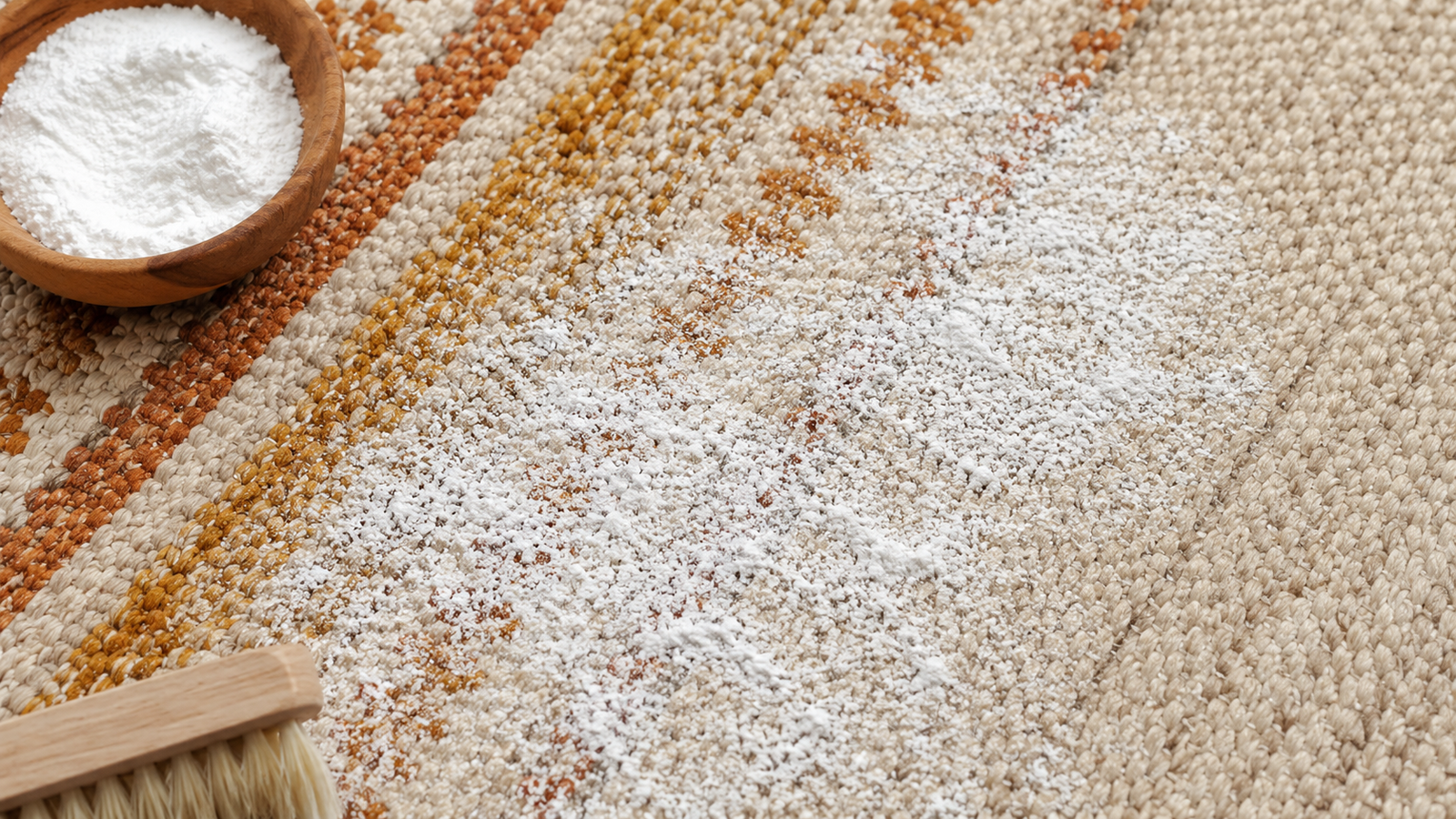
If a faint mustiness has already crept in, it's usually treatable at home as long as you catch it early. Sprinkle baking soda generously over the rug, leave it for thirty minutes to absorb odour, then vacuum thoroughly. A light mist of diluted white vinegar, about one part vinegar to four parts water, helps neutralise mould spores and odour without the bleaching risk that stronger chemicals carry around natural dyes. Tuck a few charcoal pouches near or under the rug in the room itself, they're inexpensive and pull moisture from the air over time. On any dry, sunny break in the monsoon, and there's usually at least one every couple of weeks, take the rug outside and let direct sunlight and airflow do the rest.
If the smell doesn't improve after a proper airing and clean, or if you spot actual grey-green patches rather than just an odour, that's past the point of a home remedy. A rug that stays damp no matter how much you dry it, or mould that keeps reappearing in the same spot, is worth having professionally assessed rather than treated repeatedly at home.
Storing A Rug For The Monsoon Season
If you're rolling up a rug rather than using it through monsoon, a few storage habits stop it from coming out worse than it went in. Make sure the rug is completely dry before storing it, even a little residual dampness turns into a mould problem inside a closed space within days. Roll it rather than folding it, folds create creases where moisture and dust settle more easily. Wrap it in breathable cotton or muslin, never plastic or a vacuum-sealed bag, which trap the exact humidity you're trying to avoid. Slip in two or three silica gel sachets before sealing the wrap, and check on the rug once a month if the season runs long, just to make sure nothing's changed.
Quick Monsoon Rug Care Checklist
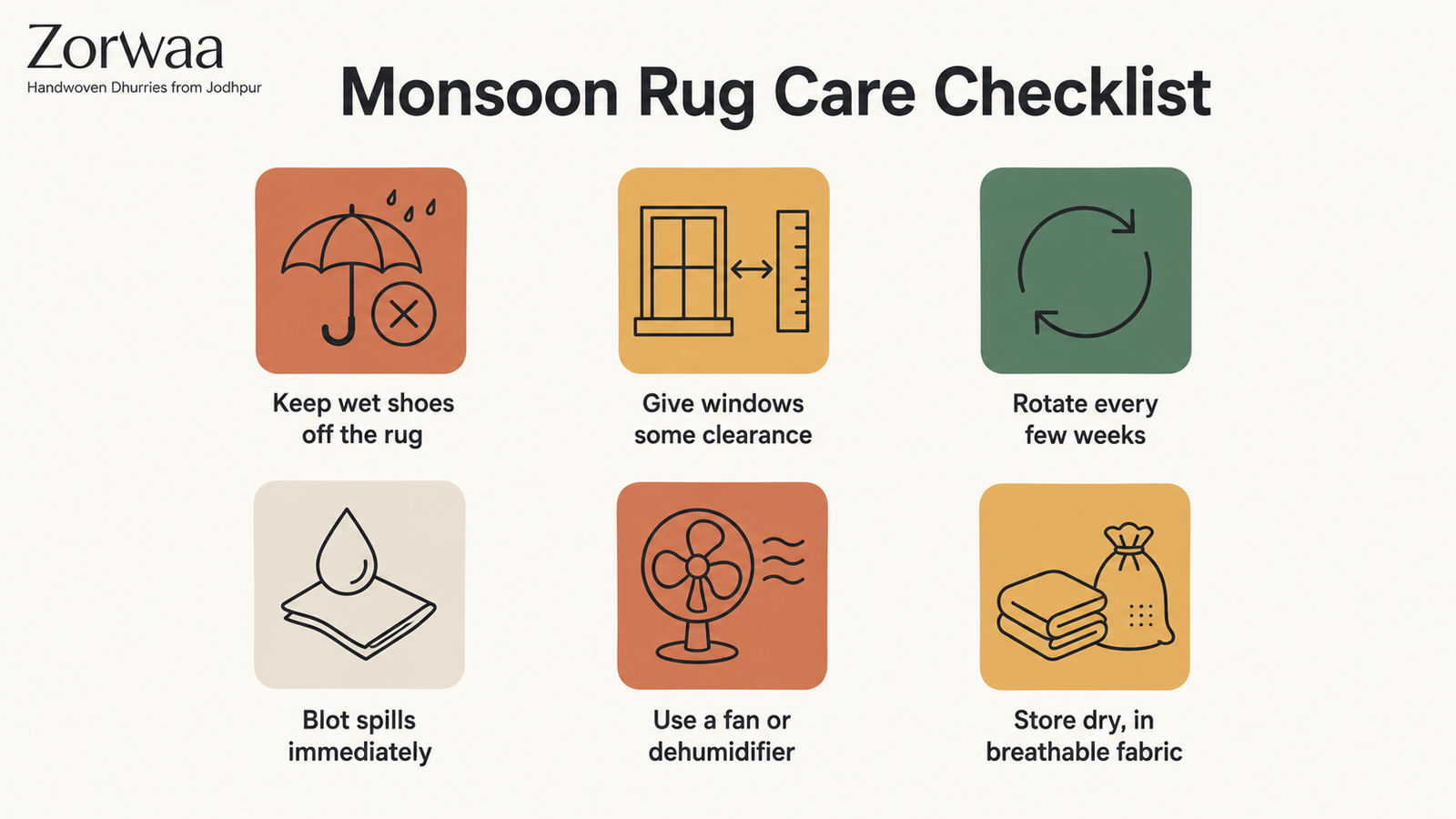
- Keep wet shoes and umbrellas off the rug entirely
- Give rugs near windows and exterior walls a few inches of clearance
- Rotate every few weeks so air reaches the whole rug evenly
- Blot spills immediately rather than letting them air dry on their own
- Run a fan or dehumidifier on the dampest days
- Store only when fully dry, wrapped in breathable fabric, never plastic
Frequently Asked Questions
How do I stop my rug from smelling musty during the monsoon?
Keep humidity down with ventilation or a dehumidifier, avoid trapping moisture near windows or damp walls, and clean up spills as soon as they happen instead of leaving them to dry on their own. If a smell has already set in, baking soda followed by a diluted vinegar mist usually clears it.
Do dhurrie rugs get mouldy in monsoon?
They can if left genuinely wet for an extended period, but flatweave construction has no hidden backing or padding to trap moisture the way a pile rug does, so dhurries dry faster and are far less prone to it overall.
Is a jute rug safe to use during monsoon?
Yes, but it needs a bit more attention than wool or cotton, since jute is the most absorbent of the three. Keep it clear of splash zones near windows and any corner that stays damp, and make sure the room gets decent airflow.
Should I store my rugs away during monsoon?
Not usually necessary in a home with reasonable ventilation. If you do store one, make sure it’s completely dry, roll rather than fold it, and wrap it in breathable fabric with silica gel, never plastic.
Monsoon puts every rug in the house to a real test, but it's a season, not a permanent condition, and a handmade dhurrie built from wool, cotton or jute is more resilient than it looks once you know where the actual risks sit. Browse our living room collection or the wider traditional dhurrie range to see which weave and fibre combination suits a genuinely humid Indian home best.
One thought on “Monsoon Rug Care in India: Protecting Handmade Dhurries from Mould and Moisture”
Comments are closed.