

How To Clean A Handmade Dhurrie Or Flatweave Carpet At Home

Most people overthink this.
A handmade dhurrie doesn't need specialist equipment, expensive cleaning products, or professional intervention every few months. It needs regular, sensible attention, the kind of care you'd give any textile you want to last a long time.
What does change is the approach based on fibre type. A cotton dhurrie and a wool dhurrie respond differently to water, temperature, and mechanical stress. Getting this right matters. Getting it wrong means soaking a large wool rug in hot water, machine-washing something that was never built for a drum and can cause shrinkage, colour run, or structural loosening that isn't easy to reverse.
Below is a practical room-by-room, fibre-by-fibre breakdown of exactly what to do.
How Often Does A Dhurrie Actually Need Cleaning?
Less than most people assume.
One of the practical advantages of a flatweave dhurrie over a pile carpet is that dirt doesn't disappear into it. The surface is flat, dust and debris sit on top of the weave rather than settling deep into a pile structure. Regular shaking and vacuuming removes most of what builds up in daily use.
A quick maintenance clean once a week handles normal accumulation. Spot cleaning should happen immediately after a spill and not hours later when it has set. A thorough deep clean once or twice a year is enough for rugs in regular household use.
High-traffic areas like hallways, dining rooms, entryways need more attention. A bedroom rug used occasionally needs far less.
Regular Maintenance - The Basics
Shaking
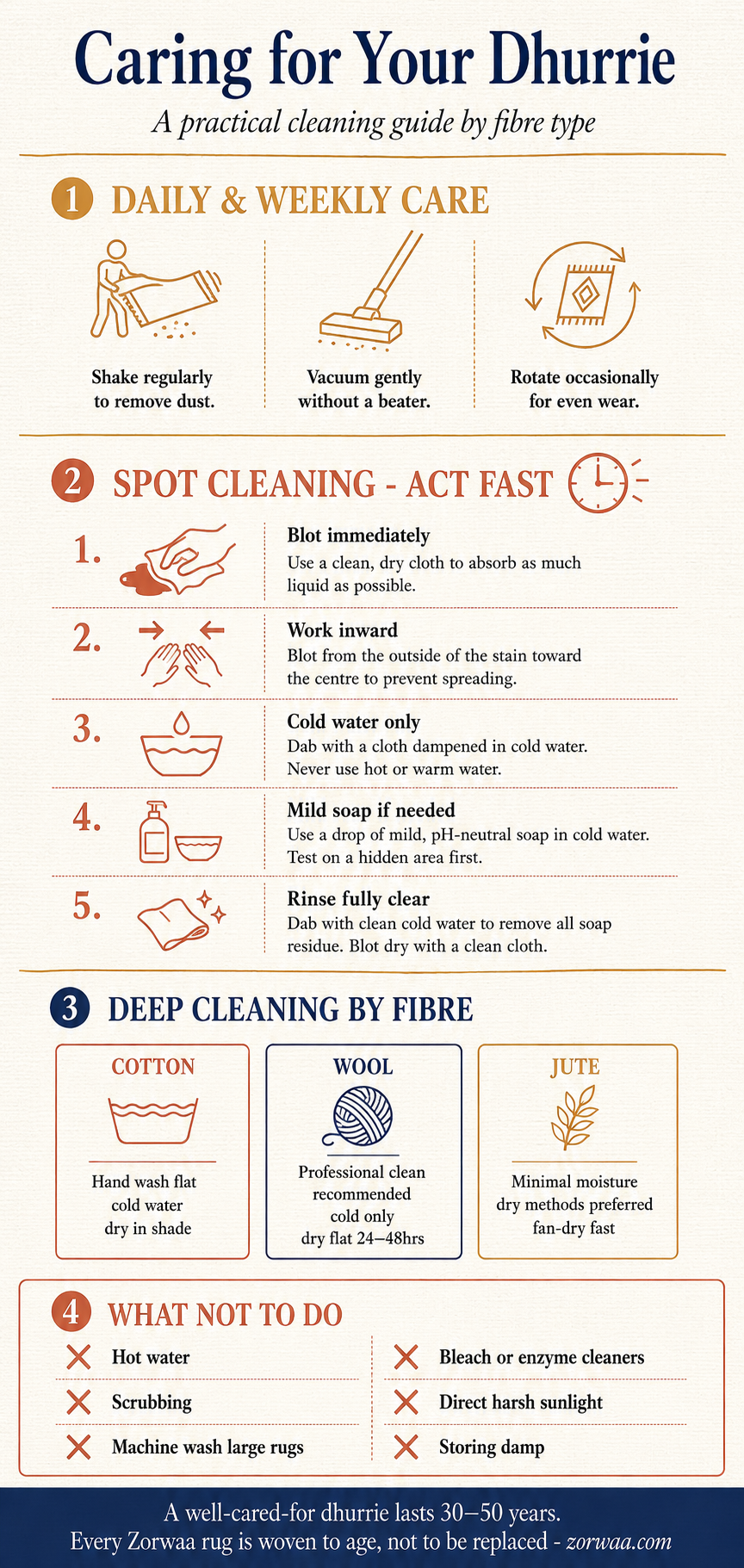
Shake your dhurrie out at least once a week. Outside if possible. Hold two corners, give it a firm snap, repeat from the other end. For larger rugs that can't be shaken easily, hang them over a railing or low fence and beat them with the flat of your palm, not a wire beater, which can catch and distort woven threads. A broad, flat surface distributes the impact evenly.
Vacuuming
Vacuum both sides. This is the step most people skip. The underside collects dust from the floor surface and on hard floors especially, often holds more accumulated grit than the top.
Use a suction-only setting. Do not use a rotating brush attachment. Rotating brushes are designed for pile carpets, they work by agitating the pile to release embedded debris. On a flatweave, that same action catches threads, stresses the weave edges, and over time pulls at the surface. A flat suction head is all you need.
Keep the vacuum moving. Sustained suction pressure held in one spot on a dhurrie can distort the weave slightly.
Rotating
Rotate your rug 180 degrees every three to six months. UV exposure is rarely perfect even across a room, one end near a window gets more sun. Areas under furniture see no foot traffic while open areas absorb constant use. Rotating distributes both sun exposure and wear patterns, which extends the life of the rug considerably.
Spot Cleaning - Handling Spills Immediately
Act fast. The longer a liquid spill sits on a natural fibre rug, the more it penetrates the fibre and the harder it becomes to remove without a trace.
Step-by-step:
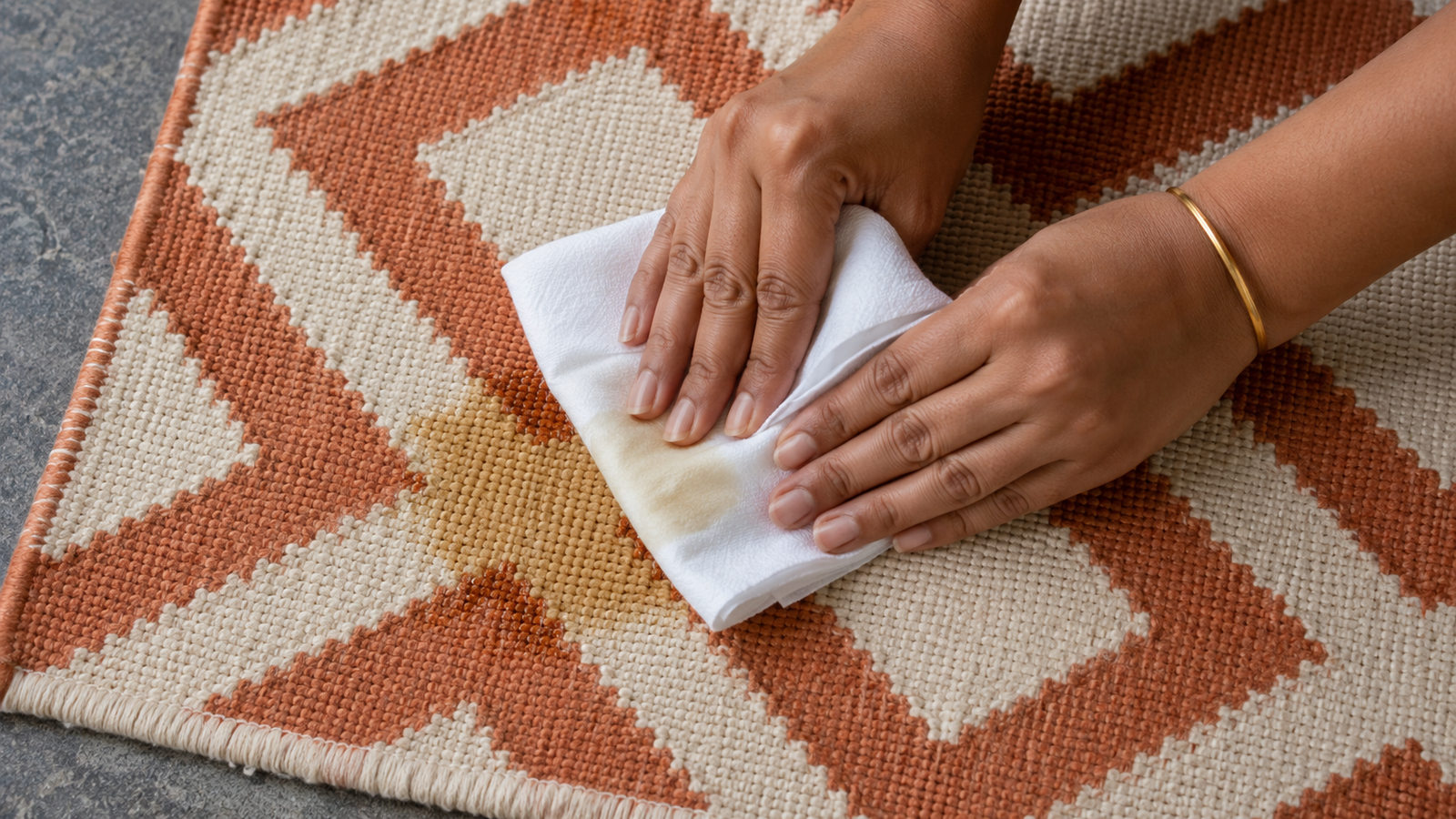
- Blot immediately: use a clean, absorbent white cloth or white kitchen paper. Press firmly, lift, move to a fresh area of the cloth, press again. Keep going until you've absorbed as much liquid as possible.
- Work inward, not outward: start at the outer edge of the spill and work toward the centre. Rubbing outward spreads the spill further.
- Rinse the area: for water-based spills (tea, coffee, juice), apply cold water with a clean cloth after blotting. Dab, don't soak.
- For oily or food spills: a small amount of mild dish soap diluted in cold water handles most residue on cotton dhurries. Apply, blot, then rinse with clean cold water to remove any soap trace.
Never use hot water. Heat sets protein-based stains like blood, milk, egg permanently and causes natural dye colours to run. Cold water only, every time.
Never scrub. Scrubbing loosens the weave surface and leaves a distorted patch that remains visible even after the stain has gone.
Avoid bleach, enzyme cleaners, or anything with optical brighteners. These damage natural dyes and break down natural fibre structure over time. Plain mild soap with a simple ingredient list is all that's needed.
Deep Cleaning By Fibre Type
Cotton Dhurries
Cotton is the most forgiving natural fibre to clean at home.
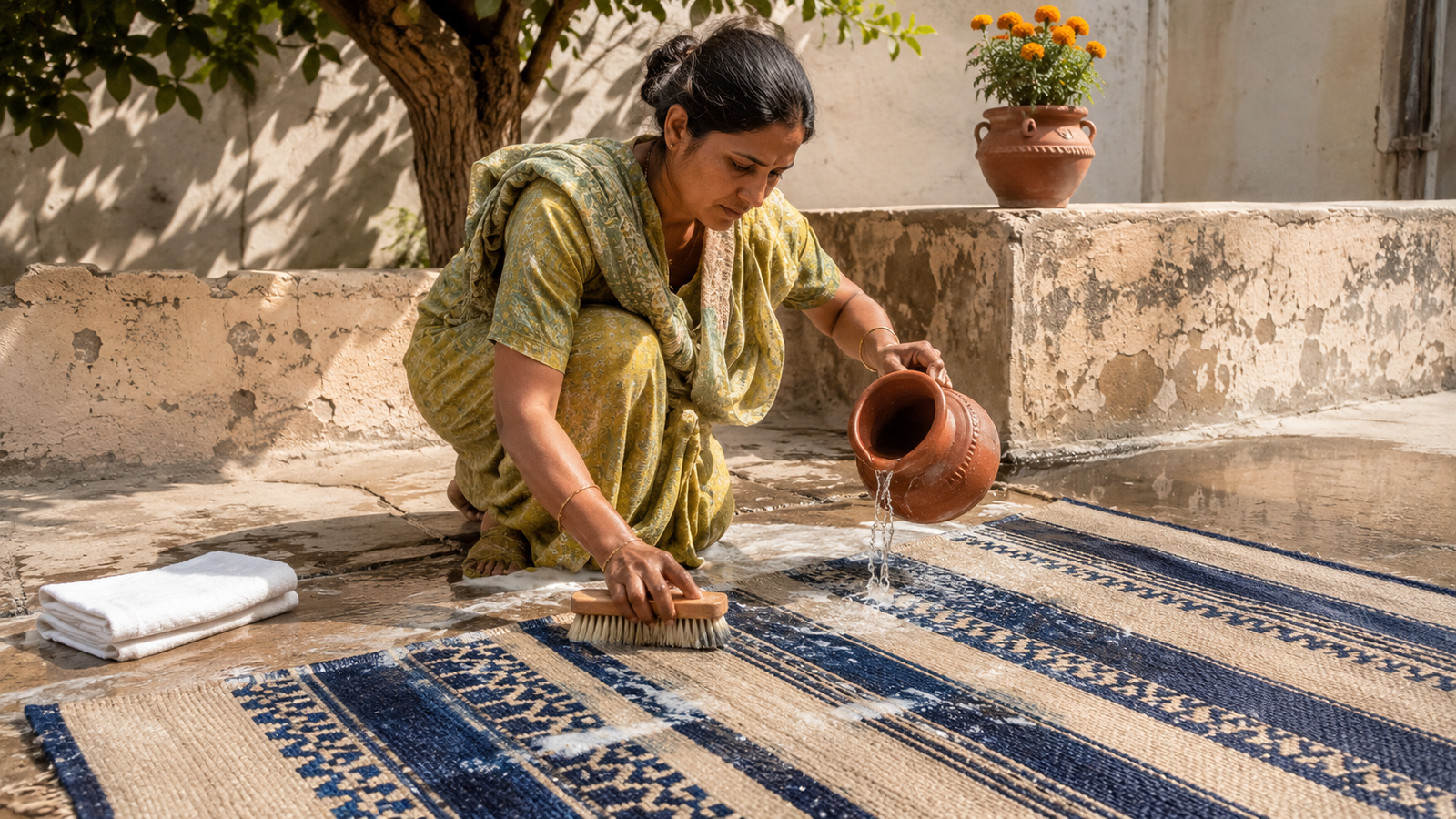
For smaller cotton dhurries roughly up to 3x5 ft, hand washing works well. Take the rug outside or into a large bathroom, lay it flat on a clean surface, and work over it with a soft brush or cloth using cold water and a small amount of mild soap. Move in the direction of the weave, not across it.
Rinse by pouring clean cold water over the surface until the water runs completely clear. Soap left in the rug attracts dirt faster than a clean rug does, rinse more than you think is necessary.
Dry completely flat. Do not hang a wet cotton rug from one end as the weight of saturated water will stretch the rug unevenly and can permanently alter its shape. Lay flat in shade or indirect sunlight and leave until fully dry before replacing on the floor.
For larger cotton dhurries, a professional hand-wash service is the practical option. Before handing one over to any dry cleaner, confirm they have experience with handmade natural fibre flatweaves specifically.
Wool and Wool-blend Rugs
Wool requires more care around water temperature and mechanical handling.
The spot-cleaning approach above applies cold water, mild soap, blot gently, and work carefully. The deeper issue with wool cleaning is what happens when things go wrong: wool fibres have a microscopic scale structure that causes them to interlock under heat and agitation. This is the felting process. A wool rug machine-washed in warm water and tumble-dried will come out smaller, denser, and structurally altered in ways that cannot be reversed.
For full deep cleaning, professional cleaning is the safer choice for most wool dhurries. If doing it yourself, use cold water only throughout, handle the wet rug carefully, wet wool is significantly heavier than dry wool, and the fibres are weaker when wet and dry completely flat in a well-ventilated space. Wool takes 24 to 48 hours to dry fully depending on thickness and ambient humidity.
Do not fold a damp wool rug for storage under any circumstances.
Jute Rugs
Jute behaves differently from cotton and wool around moisture, and the approach needs to reflect that.
Sustained water exposure causes jute to discolour, stiffen, and in persistent dampness, develop mildew. For jute rugs, the goal is minimal moisture at all times.
Stick to dry maintenance methods: shaking, vacuuming, dry brushing. For spot cleaning, blot immediately and use as little water as possible. Dry the affected area quickly and thoroughly, use a fan or place in a well-ventilated spot. A wet jute rug left to dry slowly in a damp room is a genuine problem. If you have a jute rug, treat moisture as its main enemy and clean accordingly.
Storing A Handmade Dhurrie Seasonally
Roll it, don't fold it. Folding creates sharp creases at the fold lines that weaken the weave structure over time. Roll with the pattern facing inward to protect the surface.
Store in a breathable cotton storage bag or wrapped in clean cotton cloth. Plastic is the wrong choice since moisture trapped between plastic and natural fibre is how mildew starts, even in rugs that seem completely dry.
Before putting any rug into storage, make sure it is completely clean and completely dry. Food residue, pet dander, and even oils from bare feet can attract insects or encourage mildew during months of enclosed storage. Cedar blocks placed near (not directly touching) the rug help deter moths and silverfish. Avoid synthetic mothballs, they leave a chemical smell that natural fibres hold onto for a long time.
What Not To Do - A Quick Reference
Machine-wash large rugs. For most standard home washing machines, anything over 3x4 ft is too large to wash safely, the drum agitation and weight stress both cause structural damage.
Use hot water. On any natural fibre, any time. Cold water only.
Rub stains. Blot. Every time. Rubbing spreads the stain and distorts the surface.
Leave soap in the rug. Rinse until the water runs fully clear, residual soap attracts dirt.
Dry in direct harsh sunlight. Shade or indirect sun is better. Intense direct sun causes uneven drying and accelerates colour fading in natural-dyed yarns.
Put a damp rug back on a hard floor. A damp rug on a sealed floor surface can develop mildew on the underside within 24 hours. Always fully dry before relaying.
Frequently Asked Questions
Can I machine wash a handmade dhurrie?
Very small cotton dhurries around 2×3 ft can sometimes handle a cold gentle cycle in a front-loading machine. It still carries risk. Hand washing is always safer. For anything larger than that, keep it out of the machine entirely.
How do I remove a persistent smell from a dhurrie?
Lay it flat outdoors in a shaded, well-ventilated spot for a few hours. Fresh air handles most odour issues in natural fibre rugs without any product. For something more persistent, a light spray of diluted white vinegar on cotton dhurries followed by thorough drying works. Let it dry completely before assessing the vinegar smell disappears as it dries.
How do I stop my dhurrie from slipping on a tile or marble floor?
A non-slip rug pad cut to size is the right solution. Avoid double-sided tape as it leaves adhesive residue on the floor and on the underside of the rug that is difficult to remove cleanly.
Does cleaning affect natural dye colours?
Mild cold-water cleaning does not significantly affect well-set natural dyes. What fades natural dye colours over time is sustained UV exposure, direct intense sunlight over months and years. Keep the rug away from prolonged direct sun, rotate it regularly, and the colours will age gracefully rather than bleach unevenly.
How do I know when a dhurrie needs professional cleaning?
When regular shaking and vacuuming no longer restore the surface appearance, when there’s a persistent odour that fresh air doesn’t shift, or when there’s a stain that spot cleaning hasn’t fully addressed. Once or twice a year is a reasonable professional clean frequency for rugs in active daily use.
If you're looking for handmade rugs that are built to last and that are worth the care this guide describes, browse the full Zorwaa collection. Every rug is woven in Rajasthan from natural fibres, built to age rather than deteriorate. If you need a specific size or colour, the customisation option lets you order directly to your requirements.
3 thoughts on “How To Clean A Handmade Dhurrie Or Flatweave Carpet At Home”
Comments are closed.