
Dhurrie Rugs for Winter: Are Flatweaves Warm Enough?
Dhurrie rugs for winter raise a fair question, because a flatweave has no pile. A shag or a cut-pile rug feels warm because millions of upright fibres trap air. A dhurrie is woven flat, with nothing standing up. So the honest answer is that a dhurrie is warm enough for many homes and not quite enough for some.
This guide covers where a flatweave helps, where it falls short and how to get more warmth out of one. It is written for homes with cold marble, tile or concrete floors, which includes a lot of North Indian houses in December and January and plenty of flats in colder countries too.
Table of Contents
The Short Answer on Warmth
A dhurrie takes the sting out of a cold floor, but it will not heat a room. What it does is put a layer of woven fibre between bare feet and stone. Any rug slows the loss of heat from your skin, and a wool dhurrie slows it more than a cotton one.
What a flatweave cannot do is match a thick pile rug. Insulation depends mostly on thickness, and a dhurrie is thin by design. If the floor is the main reason you dread winter mornings, a dhurrie on its own may feel like a modest improvement rather than a fix. The sections below show how to close that gap.
Why Floors Feel Colder Than the Air
A marble floor and a wooden table in the same room are at the same temperature, yet the marble feels far colder. The reason is conduction. Stone pulls heat out of bare skin quickly, while wood and wool pull it out slowly. Your feet are not sensing temperature as much as the speed at which they lose heat.
That is why even a thin rug changes how a room feels without changing the thermostat. You are not warming the floor. You are putting something between your skin and a material that drains heat. It also explains why a rug that covers more of the floor helps more than a small mat: the cold comes up from the whole surface, and every uncovered patch of stone is still draining heat from the room.
How a Flatweave Differs From a Pile Rug
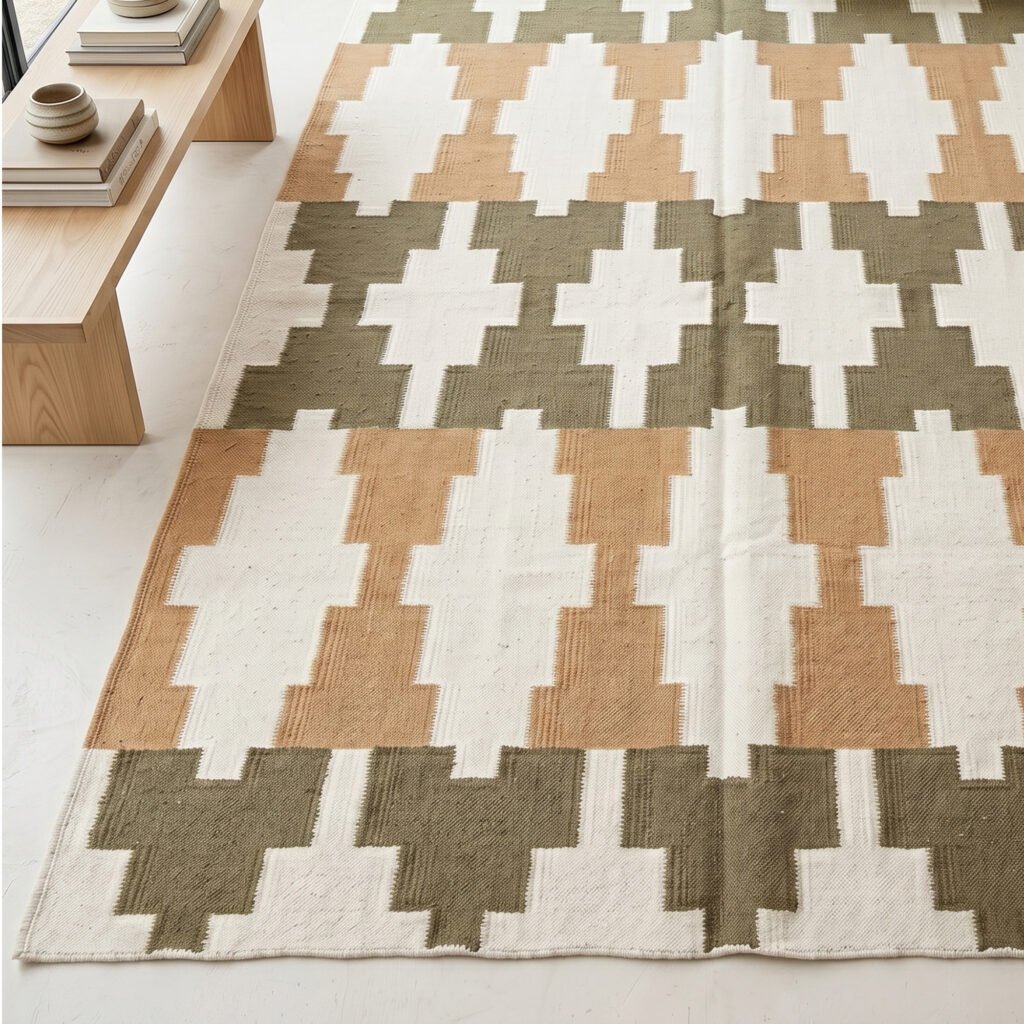
A pile rug has tufts or knots standing up from a base. The fibres hold small pockets of air, and air conducts heat poorly. A flatweave has no tufts. The warp and weft are interlaced into one dense, flat fabric that is light, reversible and thin.
Thinness works in your favour in some ways. A dhurrie dries quickly, does not hold damp in a deep pile and lies flat enough that doors and slippers do not catch on it. Our guide to flatweave vs pile rugs compares the two constructions in detail.
Warmth is where the trade-off shows. Research commissioned by the Carpet and Rug Institute found that a carpet's thermal resistance follows its total thickness closely, as WarmlyYours summarises in its guide to wool carpet over heated floors. That work was done on wall-to-wall carpet, so treat it as a direction rather than a measurement for rugs. The direction is still clear: a thin flatweave insulates less than a thick pile.
Wool or Cotton for Cold Floors
Wool is the better winter fibre. It insulates more than cotton, holds its shape and stays comfortable in damp winter air, because it can take up a fair amount of moisture without feeling wet. A dense, heavier wool dhurrie holds more warmth than a light one, so check the weight and the tightness of the weave before you buy.
Cotton is cooler to the touch and lighter. That makes it a good summer and shoulder-season rug, and a fine winter choice in rooms that are already heated. On bare cold stone it does less. Jute is stiffer and rough underfoot, and it does little for cold feet by itself, though it works well as a base layer under something softer.
Many households keep both: cotton dhurries for the warm months and wool for winter. Our guide to natural fibre rugs compares wool, cotton and jute side by side.
Where Dhurrie Rugs for Winter Work Best
A dhurrie earns its place wherever you stand or sit on cold stone for more than a moment.
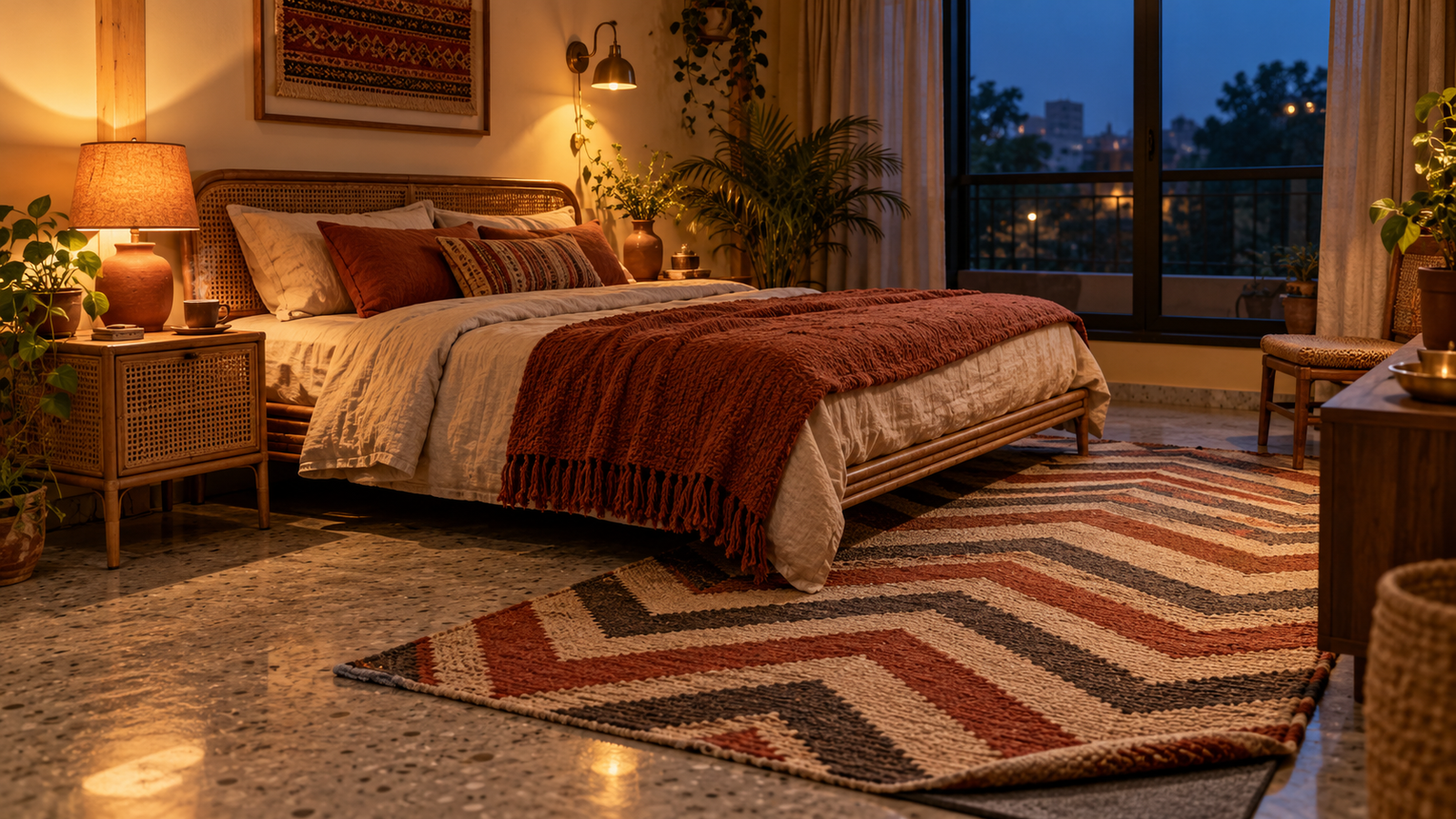
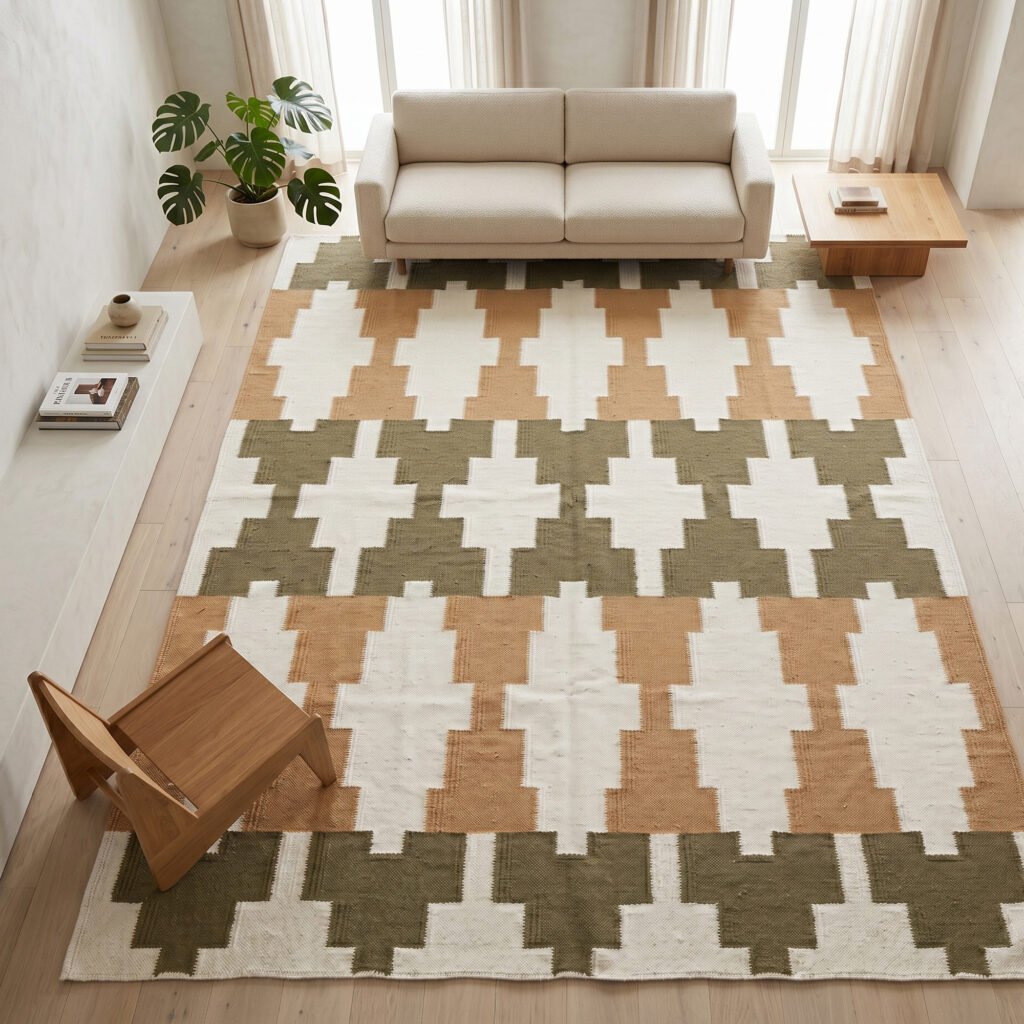
In a bedroom, that is the spot where your feet land when you get out of bed. A pair of runners, one on each side, covers it, and a larger dhurrie that extends past the bed on both sides does more. In a living room, a wool dhurrie in front of the sofa gives your feet somewhere warm to rest, and a bigger one under the whole seating group turns a cold corner into a usable one. In a study or home office, it keeps your feet off the floor for hours at a stretch.
Rooms with little foot traffic and no sitting, such as a hallway or a passage, gain the least from a dhurrie in winter terms. If your budget covers only one rug, put it where you spend the most time with bare or sock feet.
Products You May Like
-51%
Select options
This product has multiple variants. The options may be chosen on the product page
Handwoven Wool Dhurrie Rug Wodden Brown & Green | Modern Handmade Flatweave Area Rug
₹2,399.00 – ₹43,200.00Price range: ₹2,399.00 through ₹43,200.00-51%
Select options
This product has multiple variants. The options may be chosen on the product page
Handwoven Blue Wool Dhurrie Rug | Boho Modern Flatweave Area Carpet
₹2,399.00 – ₹43,200.00Price range: ₹2,399.00 through ₹43,200.00-51%
Select options
This product has multiple variants. The options may be chosen on the product page
Handmade Kilim Wool Jute Rug, Classic Flatweave Area Rug
₹2,399.00 – ₹43,200.00Price range: ₹2,399.00 through ₹43,200.00-50%
Select options
This product has multiple variants. The options may be chosen on the product page
Cotton Panja Dhurrie Rug for Dining Room Cotton Decor
₹3,800.00 – ₹64,800.00Price range: ₹3,800.00 through ₹64,800.00How to Make a Dhurrie Warmer
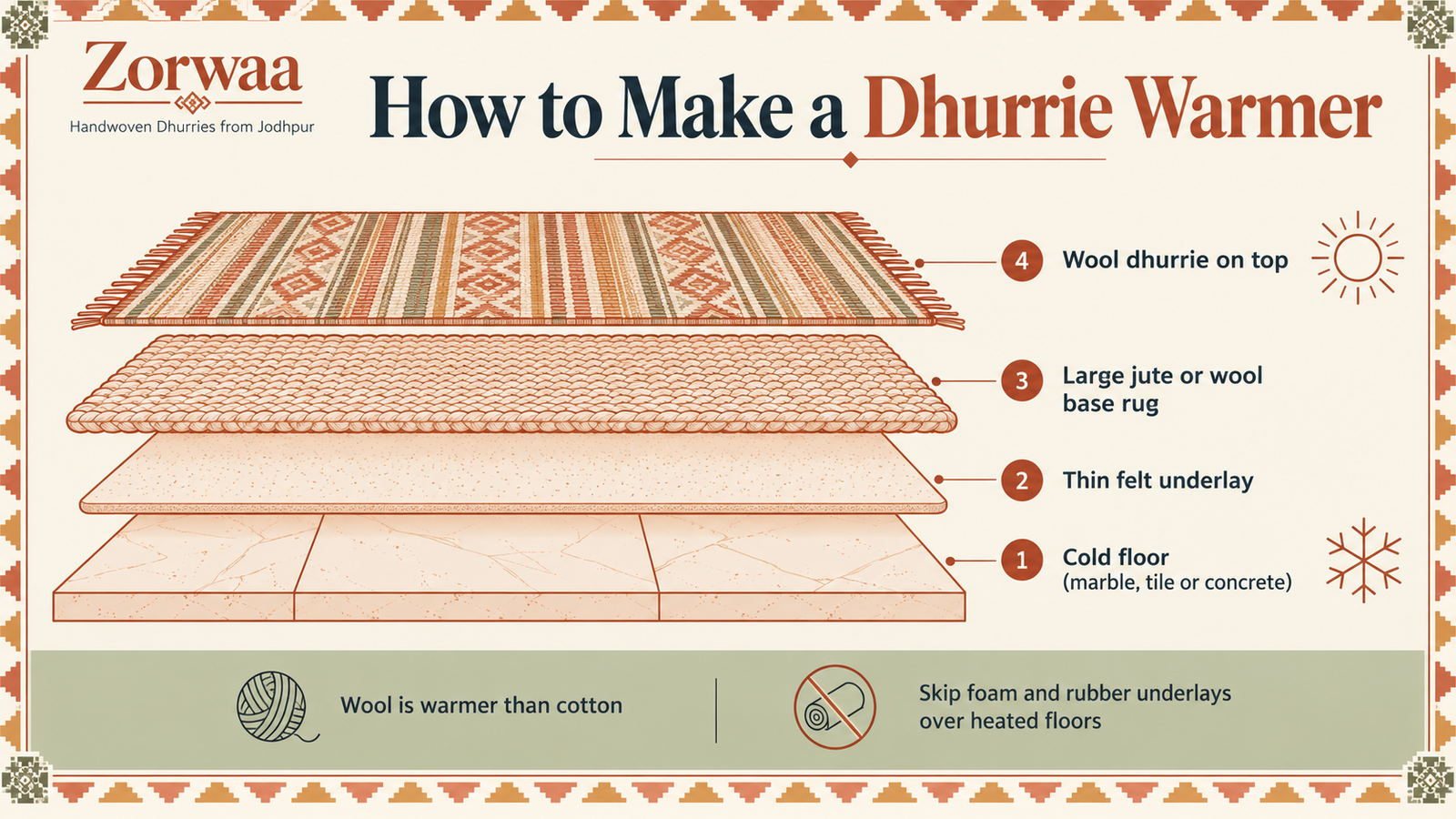
The simplest answer is to add layers rather than replace the rug. Three changes do most of the work.
Start with an underlay. A thin felt or felt-and-rubber underlay adds thickness and a still layer of air between the rug and the floor. It usually does more for floor warmth than choosing a slightly thicker rug, and it stops a flatweave creeping on polished stone.
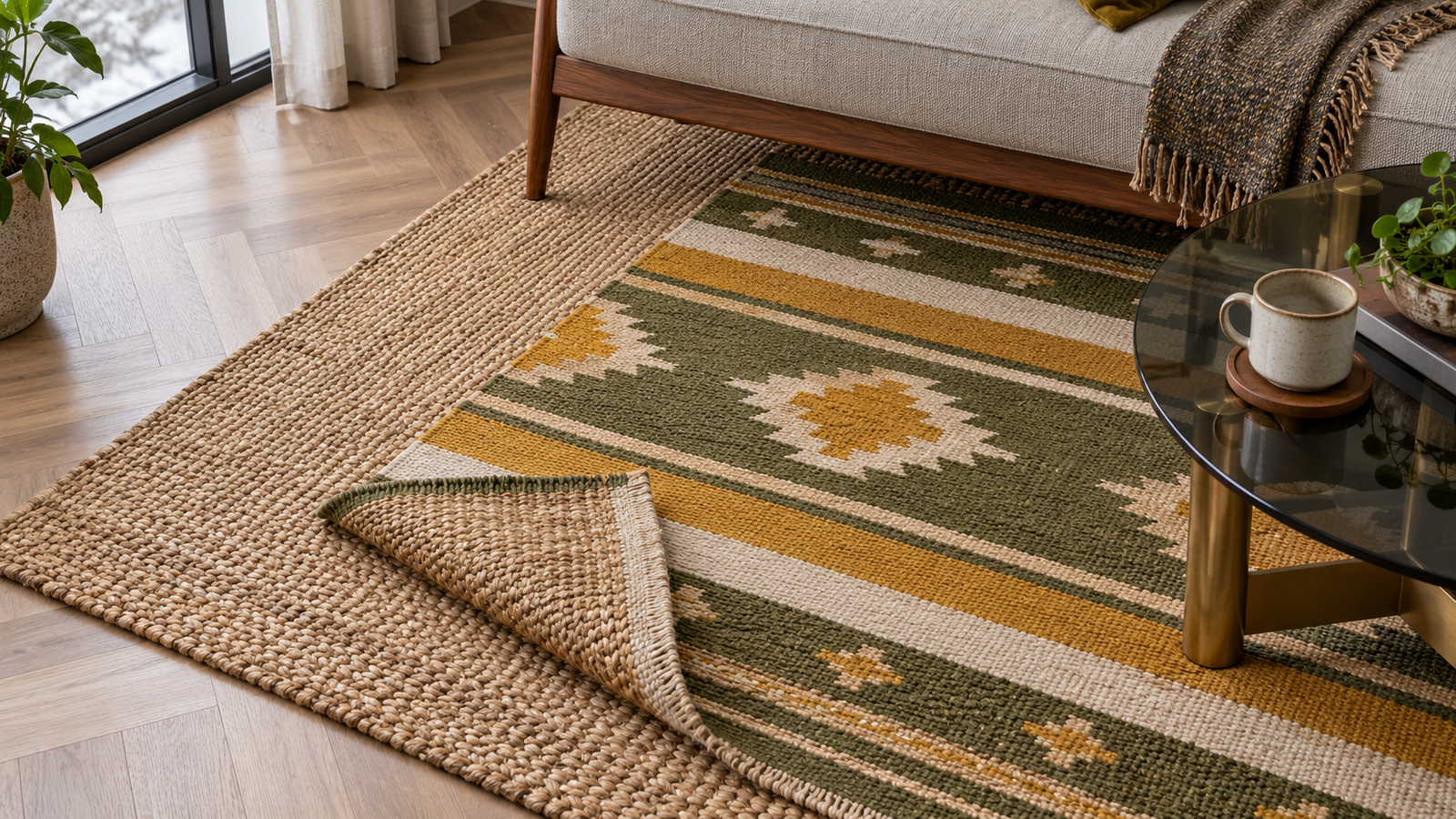
Then cover more floor. A large, chunky base rug in plain wool or jute with a smaller wool dhurrie on top adds thickness exactly where your feet land. Our rug layering guide shows how to pair sizes and textures so the stack looks planned rather than piled up.
Finally, change the rug with the season. Put the cotton dhurries away and bring out wool when the mornings turn cold. It is a small habit, and it matches the rug to the weather the way you already match your bedding.
Dhurrie Rugs and Underfloor Heating
If your home has underfloor heating, a thin flatweave is one of the easier coverings to live with, because there is little thickness to hold heat in. The problems come from what sits underneath. WarmlyYours, an underfloor heating supplier, advises avoiding rubber or foam backings and pads with high thermal resistance over heated floors, because they trap heat. It also notes that wool resists heat transfer more than synthetic fibres do, so a thick wool rug needs more thought than a thin one.
Use a thin felt underlay or none, and check your heating system's guidance before you lay anything. Few homes in India have underfloor heating, but buyers in the UK, Europe and North America often do, and the same advice applies to them.
When to Choose a Pile Rug Instead
We weave flatweaves, so it would be easy to oversell them. If the room is properly cold, if children play on the floor all winter, or if you like to sit on a rug rather than walk across it, a pile rug will feel warmer. A dhurrie then works better as a layer on top, or in the rooms where you only need to take the chill off.
A flatweave does have one real advantage when you are building warmth in layers. It sits flat under sofa legs and over other rugs without wobbling, which is why it makes such a good top layer.
Winter Care for Dhurrie Rugs
Keep rugs well away from open flames, electric coil heaters and room heaters. Wool is harder to ignite than cotton, but neither fibre is fireproof.
On dry, sunny winter days, air wool dhurries outdoors for a few hours and let them cool before you bring them in. When you swap cotton for wool, clean the rug you are putting away, make sure it is completely dry, and roll it loosely in a breathable cotton sheet rather than plastic. Moths go for soiled wool, and plastic traps damp.
Quick Checklist for Winter Rugs
- Choose wool for cold floors and keep cotton for heated rooms or warm months.
- Lift the rug and judge the weight. Heavier, denser wool holds more warmth.
- Cover the area where your feet actually land, not just a decorative patch.
- Add a thin felt underlay for insulation and grip.
- Layer a small dhurrie over a chunkier base rug for extra thickness.
- On heated floors, skip foam and rubber underlays.
- Keep rugs away from open flames and heaters.
Frequently Asked Questions
Are dhurrie rugs warm in winter?
They are warmer than bare stone and warm enough for many rooms, especially in wool. Because they are thin, they insulate less than pile rugs, so add an underlay or layer the dhurrie over a thicker rug if your floor is very cold.
Which is warmer, a wool or a cotton dhurrie?
Wool. It insulates better and stays comfortable in damp air. Cotton is cooler and lighter, which suits warm months and rooms that are already heated.
Can I put a dhurrie rug over underfloor heating?
Usually yes, because a flatweave is thin. Avoid rubber or foam underlays and backings that trap heat, and follow your heating installer’s advice for your system.
Should I use a rug pad under a dhurrie in winter?
Yes, a thin felt underlay adds insulation, keeps the rug from slipping on marble or tile and protects the floor. On a heated floor, pick a thin pad with low thermal resistance.
What is the warmest way to use a dhurrie in a bedroom?
Lay a large wool dhurrie over a thin felt underlay so it extends past the bed on both sides, or place a wool runner where your feet land each morning.
A dhurrie will not turn a cold room into a warm one, but a wool flatweave, a good underlay and a rug large enough to matter make winter floors far easier to live with. If you want a size or weave made for one particular cold room, a custom rug made to your measurements is the place to start, and you can mention wool weight and weave when you brief it.
One thought on “Dhurrie Rugs for Winter: Are Flatweaves Warm Enough?”
Comments are closed.