Round Rugs: Are They Right for Your Space?
Round rugs are having a real design moment right now, but whether one belongs in your space has less to do with the trend and more to do with how your room is actually laid out. A circular rug does a genuinely different job than a rectangular one, it softens a room full of straight edges, but it also doesn't reach into corners the way a rectangle does, which matters more than people expect once furniture gets involved. This guide is a decision-helper rather than a style pitch, where a round rug genuinely works, where it usually doesn't, and how to size one correctly if you decide it's the right call for your space.
Table of Contents
Where A Round Rug Genuinely Works
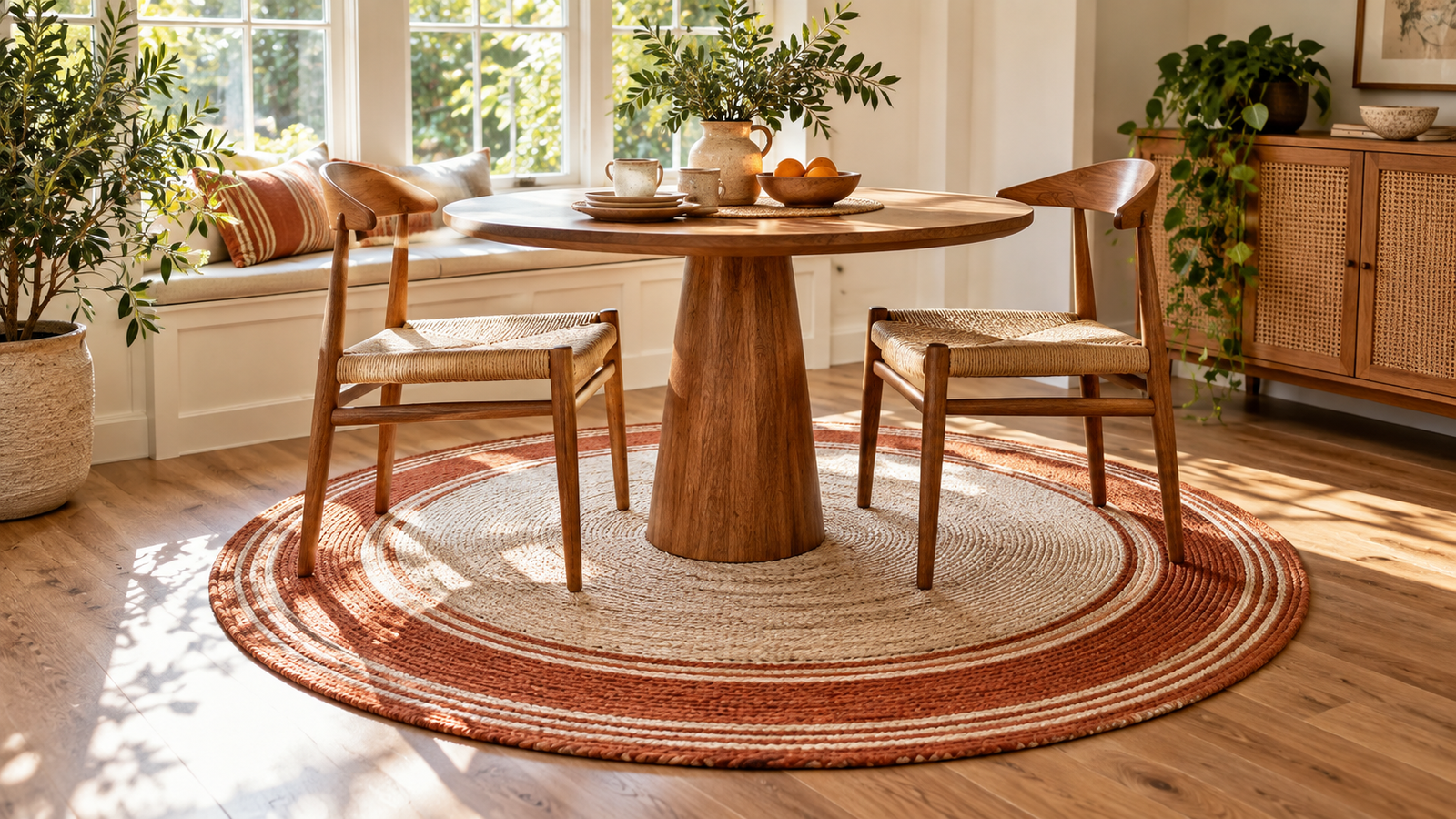
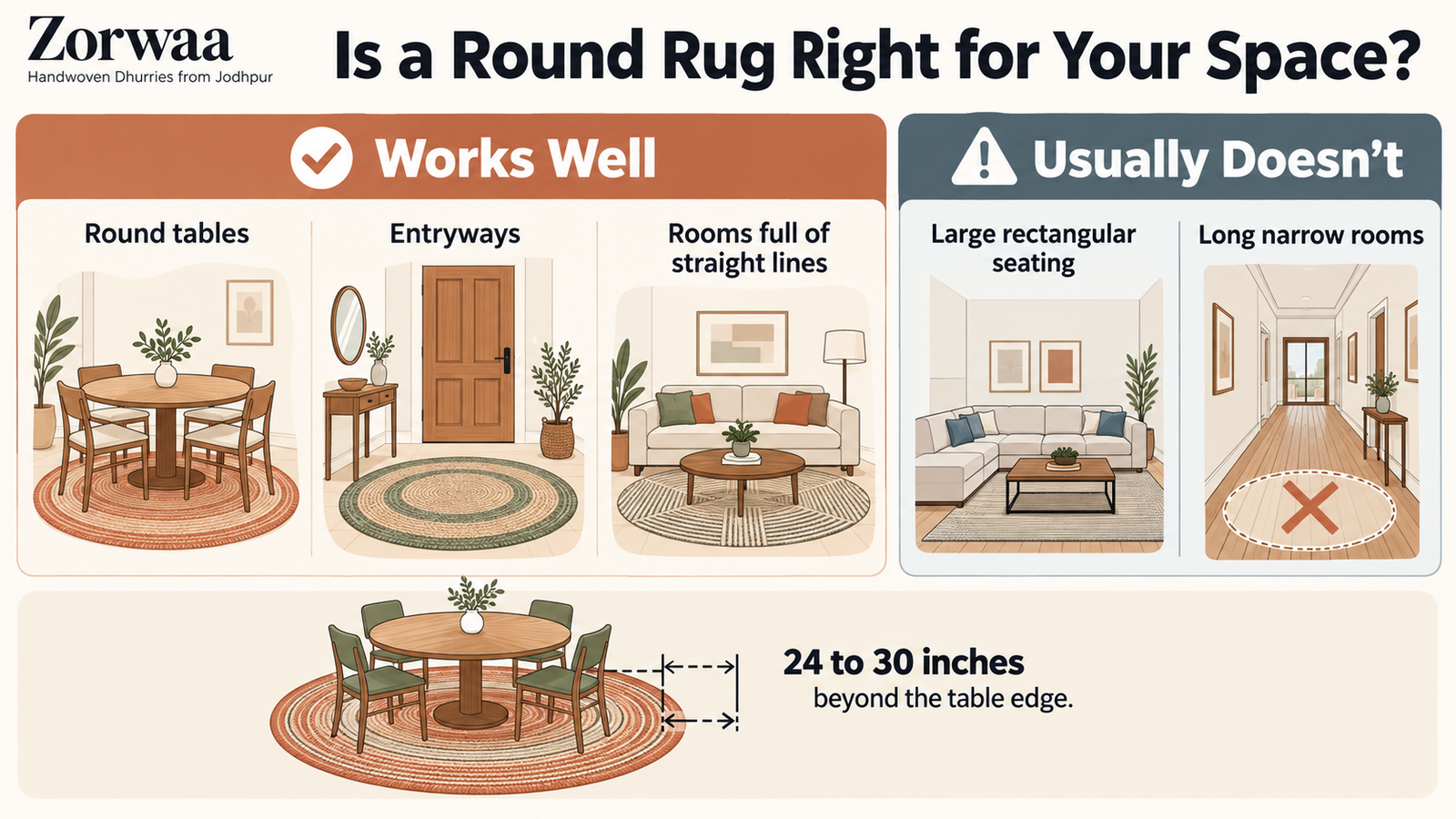
A round table is the most obvious fit, and for good reason, a round rug under a round table echoes the shape above it rather than leaving awkward triangular gaps at the corners the way a rectangular rug would. Breakfast nooks and small round dining setups are a near-perfect match for this reason.
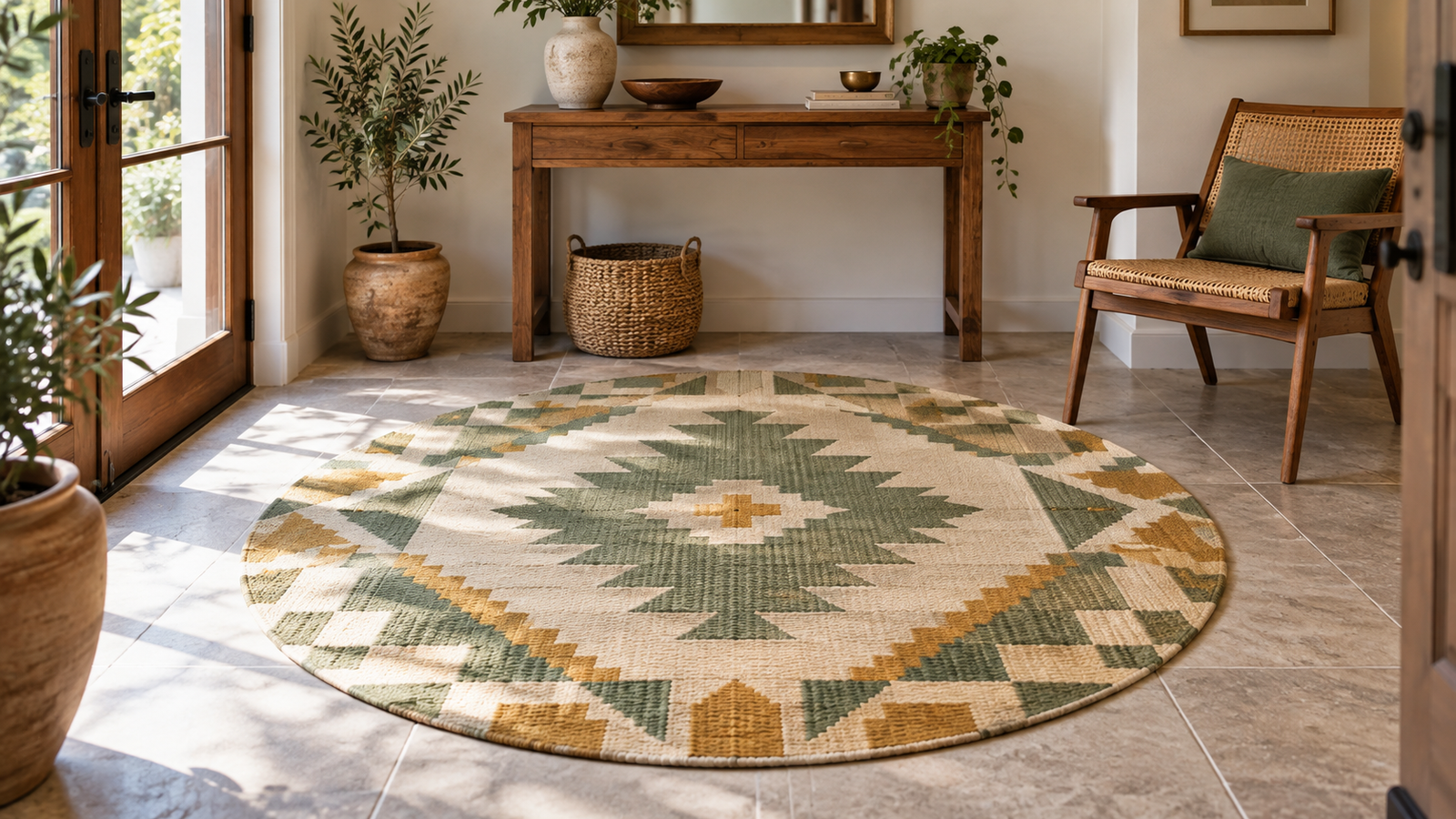
Entryways and foyers are another strong spot, particularly a square or circular entry space, where a round rug softens the geometry of the room without fighting the architecture. A round accent rug also works well under a single statement chair or a small reading nook, somewhere the rug needs to define one circular zone rather than anchor a full furniture grouping.
Round rugs genuinely help a room that's otherwise full of hard, straight lines too, a lot of rectangular furniture, sharp console tables, angular shelving. A circular shape breaks that up visually in a way another rectangle just repeats.
Where A Round Rug Usually Doesn't Work
A large rectangular seating arrangement is the clearest case where a round rug fights the room rather than helping it. A standard sofa-and-two-armchairs layout has corners and straight edges that a circular rug can't properly reach, the front legs of a sofa often end up hanging off the curve on one side while there's excess rug on the other, which looks unresolved rather than intentional.
Long, narrow rooms are a similar mismatch. A round rug doesn't stretch to fill the length of a rectangular room the way an actual rectangle does, so you often end up with a rug that works in the centre of the room and does nothing for the space around it.
None of this means round is off the table entirely in these rooms. It usually means layering a round accent rug over or alongside a rectangular one elsewhere in the same space, rather than asking one round rug to do a rectangular room's whole job.
Sizing A Round Rug Correctly
The same clearance logic from a rectangular dining table carries over to a round one, extend the rug roughly 24 to 30 inches beyond the table's edge so chairs stay on the rug even pulled out. A 48-inch diameter table generally wants an 8-foot round rug, a 60-inch table wants a 9-foot round. Our dining table rug size guide covers the fuller version of this math if you want it broken down further.
For an accent spot, entryway, reading nook, beside a single chair, size to the furniture it's actually anchoring rather than the room as a whole. Standard round sizes typically run 4, 6, 8, 9 and 10 feet in diameter, which covers most accent and dining situations without needing anything unusual.
How Pattern Translates To A Round Shape
Not every pattern moves to a circle as cleanly as it does on a rectangle. A straight-line stripe, which reads as clean and graphic on a rectangular dhurrie, has to bend or break somewhere on a round one, since there's no straight edge for it to run parallel to. Patterns built from concentric circles, radiating lines from the centre, or an all-over repeat without a strong directional stripe tend to translate far more naturally to round than a strict stripe does.
This isn't a reason to avoid round if a striped pattern is what you love. Plenty of round dhurries handle stripes by curving them gently to follow the rug's edge rather than keeping them perfectly straight, but it's worth looking closely at how a specific pattern has actually been adapted for a round shape rather than assuming it will look identical to the rectangular version you've seen elsewhere.
A Genuine Safety Angle Worth Knowing
Worth mentioning plainly rather than as a stretch: a round rug has no corners, which matters in a couple of specific, real situations. In a child's room or a playroom, removing a sharp rug corner from a space where kids are moving around at floor level is a small but genuine safety plus, not just a style choice. In a high-traffic walkway or a small space where furniture sits close to the rug's edge, rounded edges are simply less likely to catch a foot or a stubbed toe than a square corner is. It's not a reason to choose round on its own, but it's a real, honest point in round's favour where it applies.
Products You May Like
-50%
Select options
This product has multiple variants. The options may be chosen on the product page
Cotton Panja Dhurrie Rug for Coffee Table Handmade
₹3,800.00 – ₹64,800.00Price range: ₹3,800.00 through ₹64,800.00-50%
Select options
This product has multiple variants. The options may be chosen on the product page
Premium Flatwoven Cotton Dhurrie
₹3,800.00 – ₹64,800.00Price range: ₹3,800.00 through ₹64,800.00-50%
Select options
This product has multiple variants. The options may be chosen on the product page
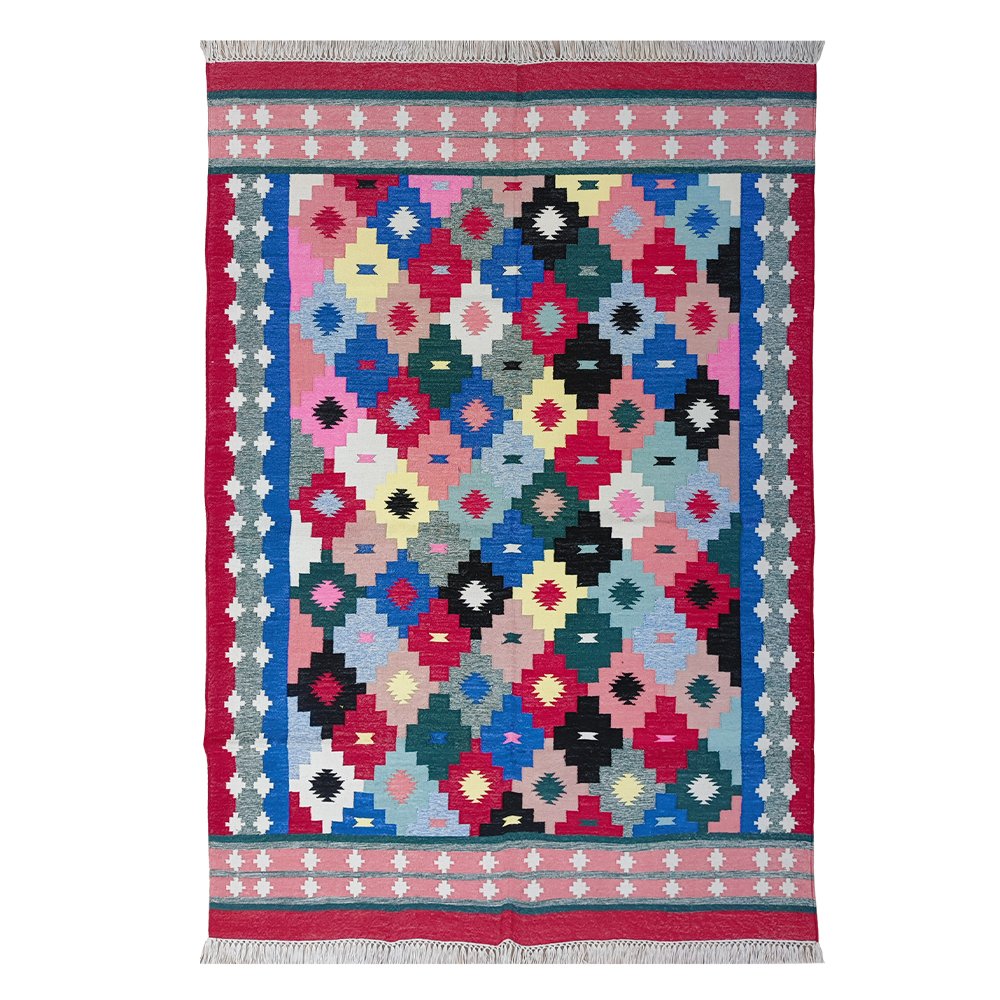
Heritage Panja Weave: Hand-Knotted Pure Cotton Dhurrie
₹3,800.00 – ₹64,800.00Price range: ₹3,800.00 through ₹64,800.00-51%
Select options
This product has multiple variants. The options may be chosen on the product page
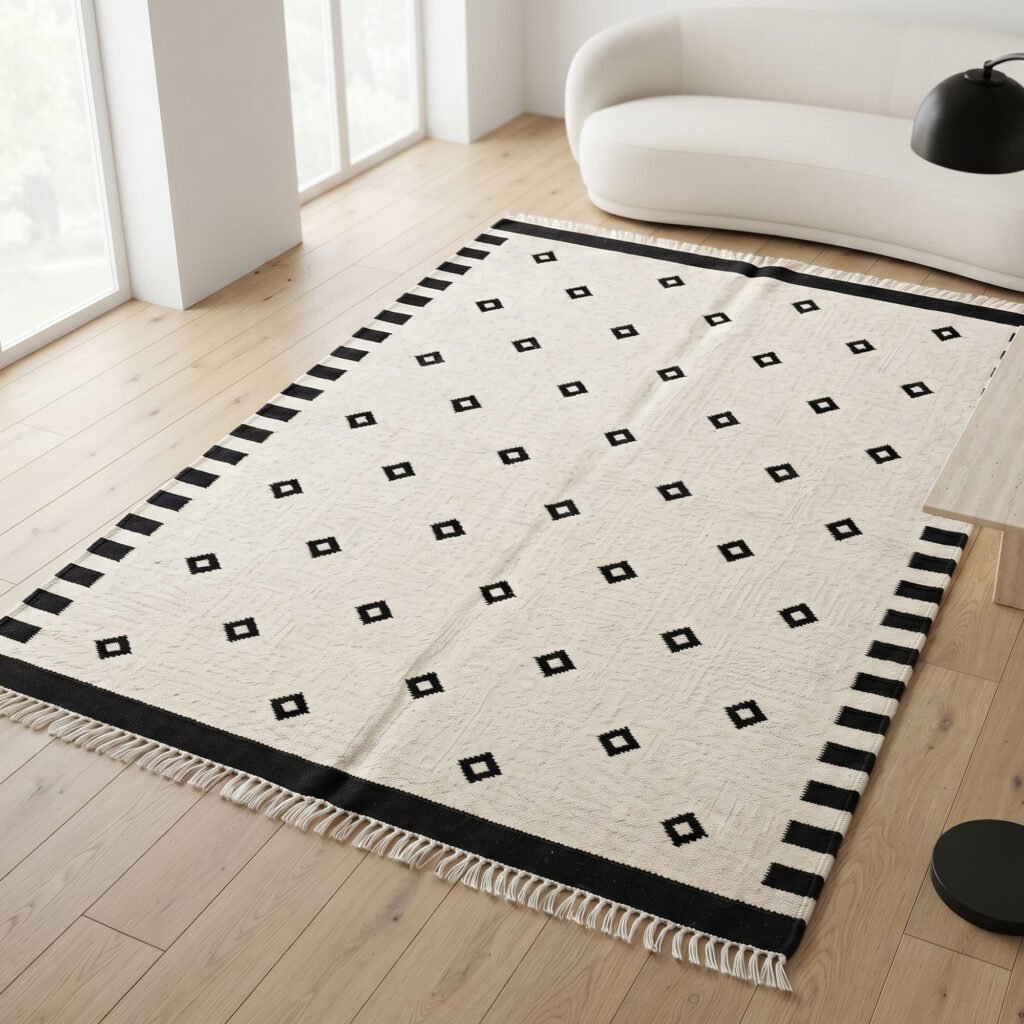
Handwoven Wool Area Rug Black & White | Modern Flatweave Dhurrie Carpet for Home Decor
₹2,399.00 – ₹43,200.00Price range: ₹2,399.00 through ₹43,200.00Where Custom Diameters Help
Standard round sizes cover most situations, but not all of them. An unusually sized round or oval table, a breakfast nook with specific space constraints, or a circular reading corner that doesn't match a standard 6 or 8-foot diameter are all situations where custom sizing gets you the exact fit a standard chart doesn't offer. Zorwaa can weave to a precise custom diameter or oval shape, so there's no need to round up to the nearest standard size and live with a rug that's slightly too big or too small for the exact spot you have in mind.
Quick Decision Checklist
- Round rugs work well under round tables, in entryways, and as accents that soften a room full of straight lines
- Round rugs usually don't work under a large rectangular seating arrangement or in a long, narrow room
- Size a round dining rug the same way as a rectangular one, 24 to 30 inches beyond the table edge
- Standard round sizes run 4, 6, 8, 9 and 10 feet in diameter
- Rounded edges are a genuine, if modest, safety plus in kids' rooms and tight walkways
- Custom diameters solve the sizing gap for unusual tables or nooks
Frequently Asked Questions
Do round rugs work in a living room?
Depends on the furniture layout. Round rugs work well as an accent under a single chair or small seating nook, but usually don’t suit a large rectangular sofa arrangement, where the corners hang off the curve.
What size round rug do I need for a round table?
Extend the rug 24 to 30 inches beyond the table’s edge. A 48-inch table generally wants an 8-foot round rug, a 60-inch table wants a 9-foot round.
Are round rugs good for kids' rooms?
Yes, generally. Removing sharp corners is a small, genuine safety plus in a room where kids are moving around at floor level.
Can I get a custom-sized round rug?
Yes, custom diameters and oval shapes are available for tables or spaces that don’t match a standard 4, 6, 8, 9 or 10-foot round.
A round rug earns its place by matching the shape of what it's sitting under or softening what's around it, not by being on trend. If your space has a round table, a soft entry corner, or a room full of straight lines that could use a break, it's a genuinely good fit. If you're anchoring a large rectangular seating arrangement, it usually isn't. Browse our traditional collection for patterns that work equally well in round or rectangular.