
How to Style a Dhurrie Rug in a Modern Home

Modern homes have a texture problem. Clean lines, neutral palettes and a lot of hard surfaces look sharp in photos, but they can feel cold to actually live in. This is exactly the gap a dhurrie rug is built to close. Learning how to style a dhurrie rug in a modern home comes down to three things: picking a pattern that fits the room's energy, choosing the right scale, and giving the rug room to do its job instead of competing with everything else in the space. Flatweave dhurries work particularly well here because they add warmth and pattern without the visual bulk of a thick pile rug, which matters in a room that's otherwise kept deliberately spare. Whether you're working with a fully minimalist space or a warmer, more layered modern look, the same handful of principles apply.
Table of Contents
Why Flatweave Works So Well In Modern Rooms
A modern room usually has fewer objects doing more visual work, so every piece earns its place through contrast rather than clutter. Flatweave does this well because it stays low profile, doors swing over it without catching, furniture sits flush instead of tipping on a thick pile edge. There's no bulk to visually compete with a room's clean lines, but there's still a textile weave, a natural fibre texture and often a slight hand-loomed irregularity that a printed or machine-tufted rug can't fake.
The material itself does some of the work too. Wool, cotton and jute all feel tactile and organic against glass, steel, poured concrete or matte-finish furniture, the kind of contrast a lot of interior designers reach for on purpose. A dhurrie under a steel-framed coffee table or beside a polished concrete floor isn't just decoration, it's often the one thing keeping the room from feeling like a showroom.
Picking A Pattern That Fits A Modern Room
Pattern does more work in a modern room than in a busier, more layered one, since there's less competing for attention. A few starting points.
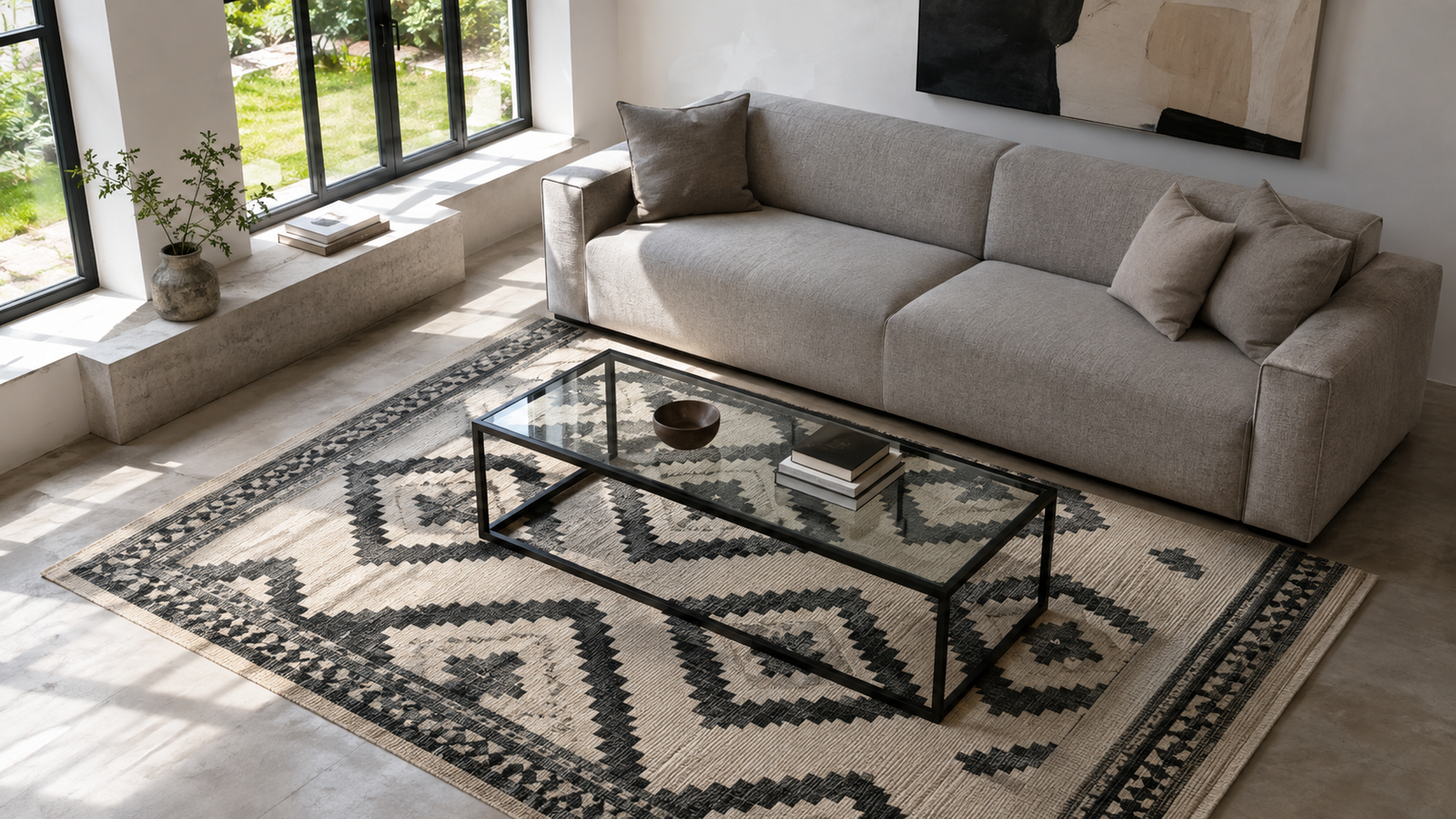
Geometric dhurries pair naturally with modern architecture, since the repeating lines and angles echo the same logic as exposed beams, grid windows or minimalist joinery. They come across as structured rather than decorative, which is exactly the tone most modern rooms are going for. Our geometric rug collection leans into this on purpose, diamond and chevron layouts especially.
Solid colour or subtly textured dhurries do the opposite job well. They stay quiet and let a striking light fixture, a piece of art or a sculptural chair lead the room instead. This is usually the safer starting point if you're not sure how much pattern you actually want to live with day to day.
Abstract patterns split the difference, bringing energy and movement without the literal repetition of a geometric grid. That suits a room that wants some personality without tipping into busy.
Four Ways To Style A Dhurrie In A Modern Home
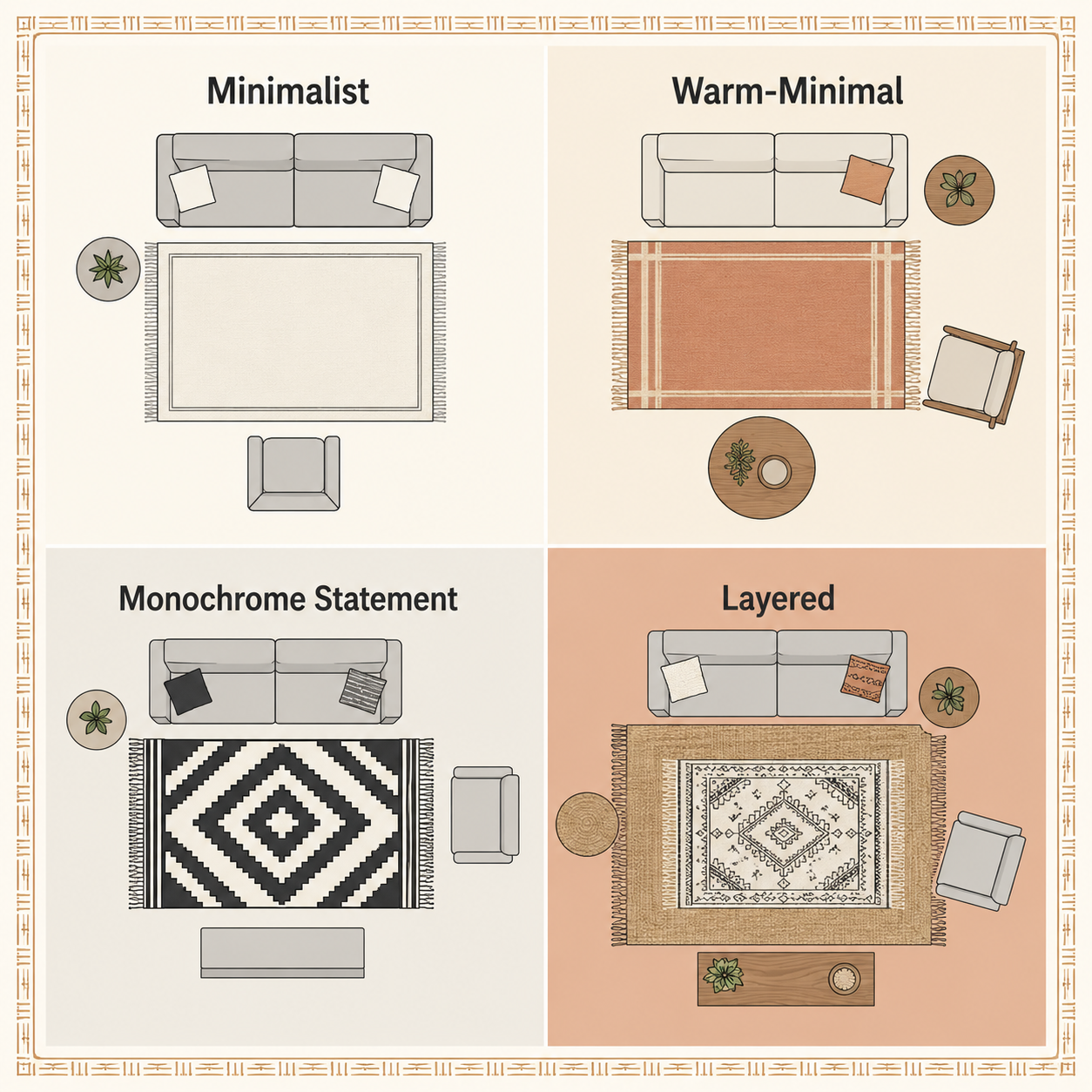
There's no single "modern" look, so here are four that consistently work, from most restrained to most layered.
The Minimalist Look
Stick to one dhurrie, one muted colour story, ivory, stone, charcoal, soft sage, and let the room's negative space do the rest of the work. This look relies on restraint more than anything else. Skip busy borders and go for a simple edge or a subtle two-tone stripe instead. The dhurrie should read as flooring that happens to have texture, not as the room's focal point.
The Warm-Minimal Look
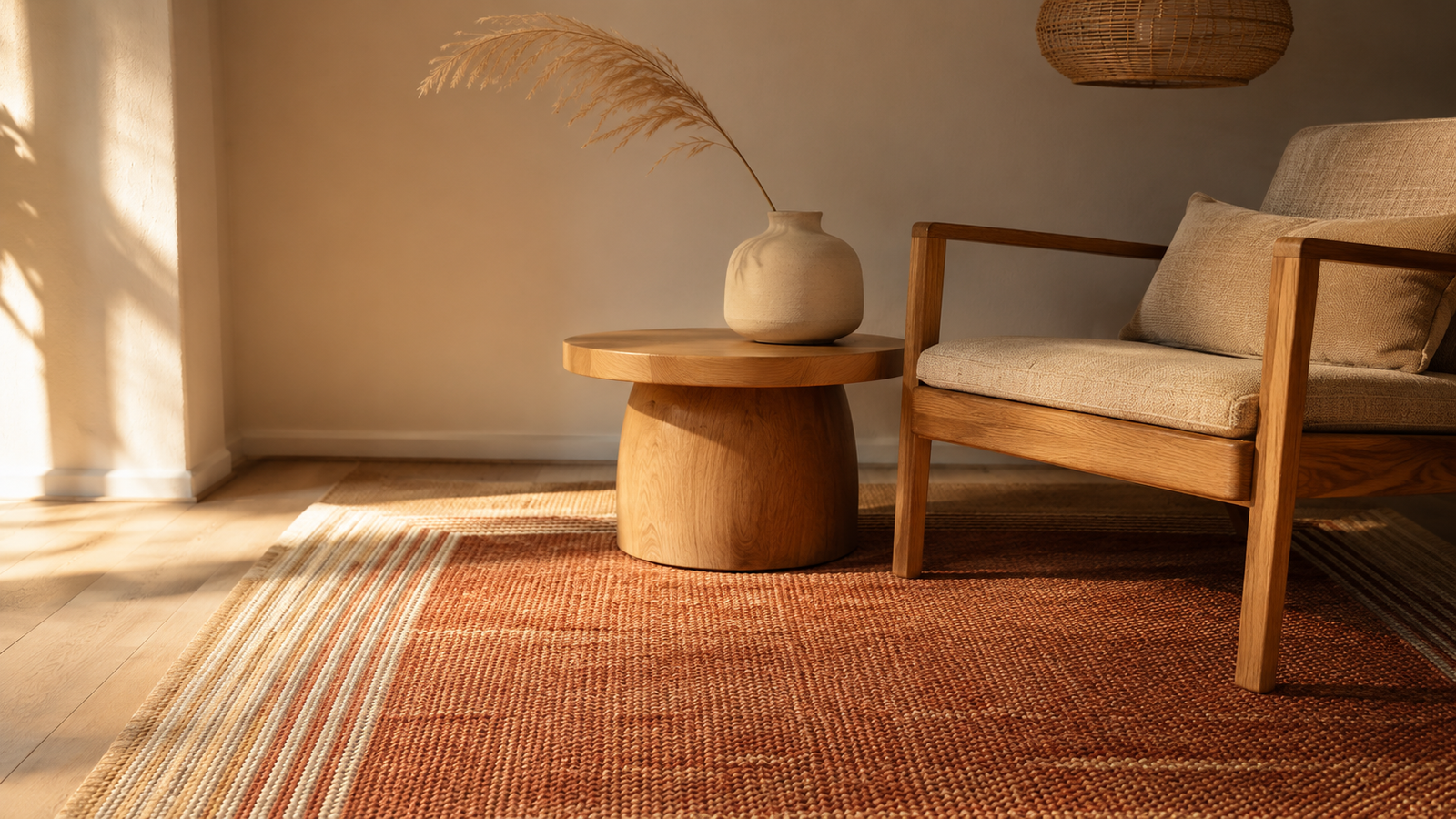
This is the look for anyone who finds pure minimalism a bit sterile. Pair a wool or wool-cotton dhurrie in warm neutrals, oatmeal, terracotta, muted rust, with light or mid-tone wood furniture and one graphic element like a woven pendant light or a ceramic vase. The rug's job here is to soften all that wood and stone without adding visual noise of its own.
The Monochrome Statement Look
If your walls, sofa and furniture are already neutral, this is where a bolder dhurrie earns its keep. Pick one graphic geometric or abstract pattern in two or three colours and let it be the only patterned thing in the room. Everything else, cushions, throws, art, should stay solid so the rug doesn't have to compete for attention.
The Layered Look, For A Warmer Modern Space
Layering a smaller dhurrie over a larger jute or sisal rug adds depth without losing a modern room's restraint, as long as the two textures stay in the same tonal family. This is really its own topic though, worth a dedicated read if you want the full breakdown on ratios, direction and which combinations actually work.
Placement And Sizing, The Short Version
Sizing rules don't change just because a room is modern. Front legs of the main seating should sit on the rug, at least, so the arrangement feels anchored rather than floating. What does change is how visible the surrounding floor is, since a lot of modern layouts leave the bare floor exposed on purpose as negative space. For the full breakdown by room, our rug size guide walks through the exact measurements. For a modern living room specifically, err slightly smaller rather than slightly bigger, an oversized rug can undercut the sense of restraint you're going for.
Pairing Dhurries With Modern Furniture And Materials
Modern furniture tends to lean on a narrow set of materials, leather, steel, glass, matte-lacquered wood, and a dhurrie's job is to introduce texture without introducing clutter. A few pairings that consistently work: a geometric wool dhurrie under a glass coffee table, where the pattern stays visible through the glass instead of hidden under it. A solid jute-cotton blend under a leather sectional, where the contrast in texture does more than colour ever could. A muted, low-contrast dhurrie under a black steel-framed dining set, so the furniture stays the visual anchor and the rug stays underneath it, literally and visually.
The general rule holds across all of these: the more materials already doing visual work in a room, glass, steel, exposed brick, the quieter the dhurrie should be.
A Few Styling Mistakes To Avoid In Modern Spaces
Going too small is the most common one. A dhurrie that only reaches the front legs of the sofa, or worse, floats in the middle of the room untouched by any furniture, makes an otherwise considered space look unfinished. Choosing a heavily ornamented traditional pattern for a fully pared-back room is another, the two aesthetics can work together, but it takes more restraint elsewhere in the room to pull off than most people plan for. And skipping the texture question entirely, treating the dhurrie as just a colour swatch on the floor, misses half the reason flatweave works so well in modern spaces to begin with. The weave itself is doing as much as the pattern.
Quick Styling Tips To Remember
- Choose one dominant pattern per room, not several competing prints
- Size slightly smaller rather than bigger for a true minimalist look
- Let the weave's natural texture contrast with hard modern materials
- Keep colour palettes muted unless the dhurrie is your one statement piece
- Anchor the rug under furniture rather than letting it float
- Save heavier layering for a warmer, more maximalist modern space
Frequently Asked Questions
Do dhurrie rugs work in modern minimalist homes?
Yes. Flatweave construction and natural fibre texture suit minimalist rooms particularly well, since they add warmth without the visual bulk of a pile rug. Solid or subtly patterned dhurries give the most minimalist result.
What size dhurrie rug works best in a modern living room?
At minimum, the front legs of your main seating should rest on the rug. Modern rooms often leave more bare floor exposed than traditional ones, so sizing slightly smaller than you might elsewhere is usually the safer call.
Can I use a geometric dhurrie in an otherwise plain modern room?
Yes, and it’s one of the more reliable modern looks. One bold geometric or abstract pattern works as a room’s single statement piece as long as everything else, furniture, cushions, art, stays solid.
Should I layer a dhurrie over another rug in a modern space?
It can work well if the two textures stay in the same tonal family, a flatweave dhurrie over jute or sisal, for instance. Modern rooms generally call for subtler layering than boho or maximalist spaces do.
A dhurrie earns its place in a modern room the same way it always has, through the weave, the material and the hand behind it, just applied with a lighter touch than a maximalist space would use. Every dhurrie in Zorwaa's modern collection is woven in wool, cotton or jute by artisans in Bishnoi Village and Salawas, so the texture you're styling around is the real thing, not a printed imitation. Browse our modern rugs collection to find a starting point for your own room.
One thought on “How to Style a Dhurrie Rug in a Modern Home”
Comments are closed.