
Pooja Room Rugs: Size, Material and What to Avoid
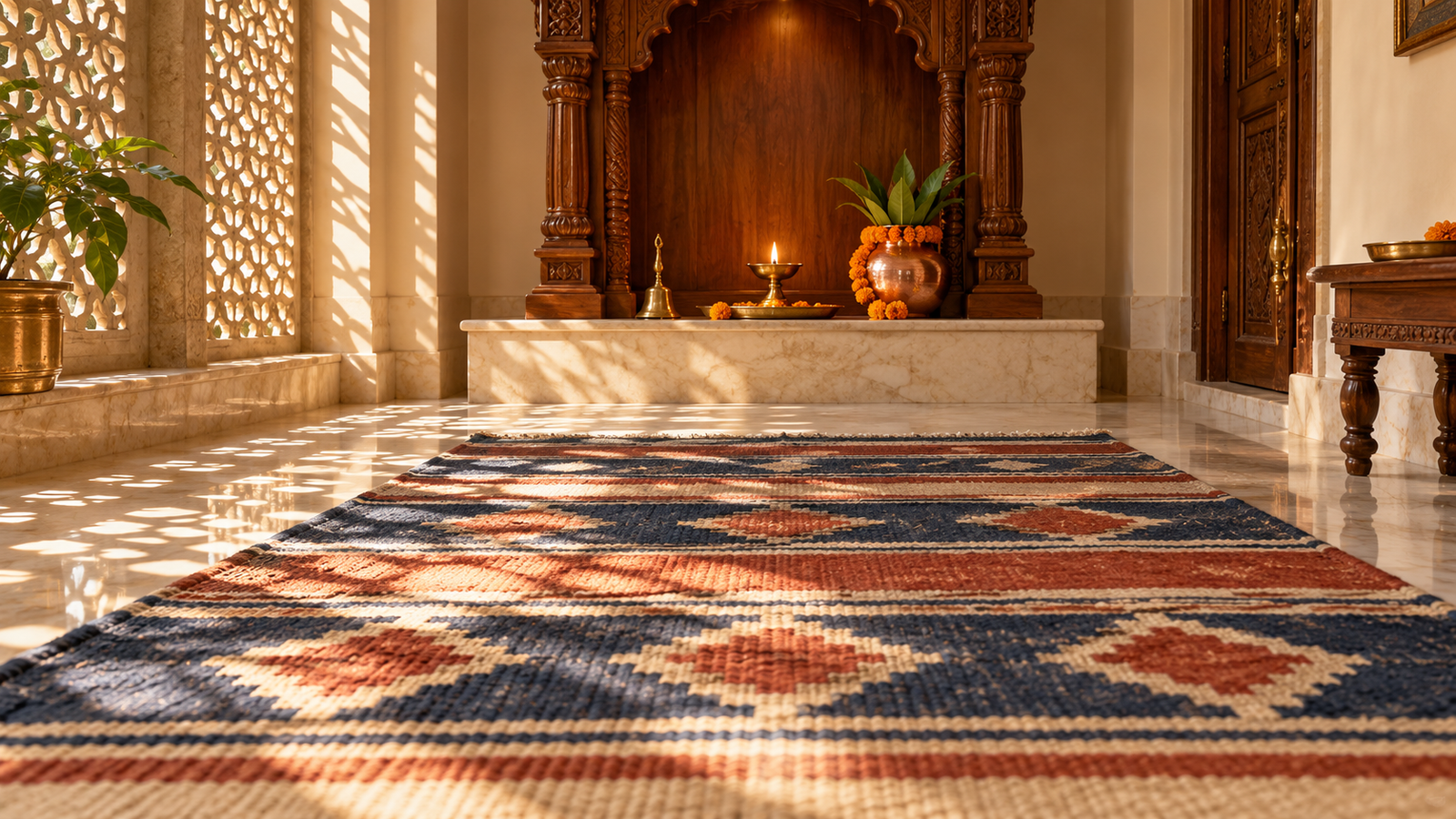
Pooja room rugs have a harder job than most. They get sat on, knelt on and walked over barefoot, and they sit a few inches from diyas, ghee, flowers and turmeric. A quiet corner kept for prayer or meditation asks for the same comfort without the flames. Getting the rug right comes down to size, fibre and a short list of things to leave out.
This guide covers a dedicated pooja room, a mandir niche in a living room, and a floor-sitting corner for meditation. It is written around handwoven flatweave dhurries, because that is what the artisan families we work with weave in Bishnoi Village and Salawas. Where a dhurrie is not the best fit, we say so.
Table of Contents
Why A Rug Belongs In A Pooja Or Meditation Space
A rug gives you a clean, insulated place to sit, and it keeps polished marble or tile from taking all the wear. Most pooja floors are stone. Stone is cold on a winter morning, slippery under bare feet and hard on the knees during a long sit. A thin woven layer fixes all three without lifting you off the floor.
Floor sitting is also an old use for dhurries. The smallest traditional size is the aasan, a seat of about 24 by 24 inches (61 by 61 cm) made for meditation, as Wikipedia's entry on the dhurrie notes. A flatweave has no pile, so you sit level and steady instead of sinking in.
What Size Pooja Room Rugs Should Be
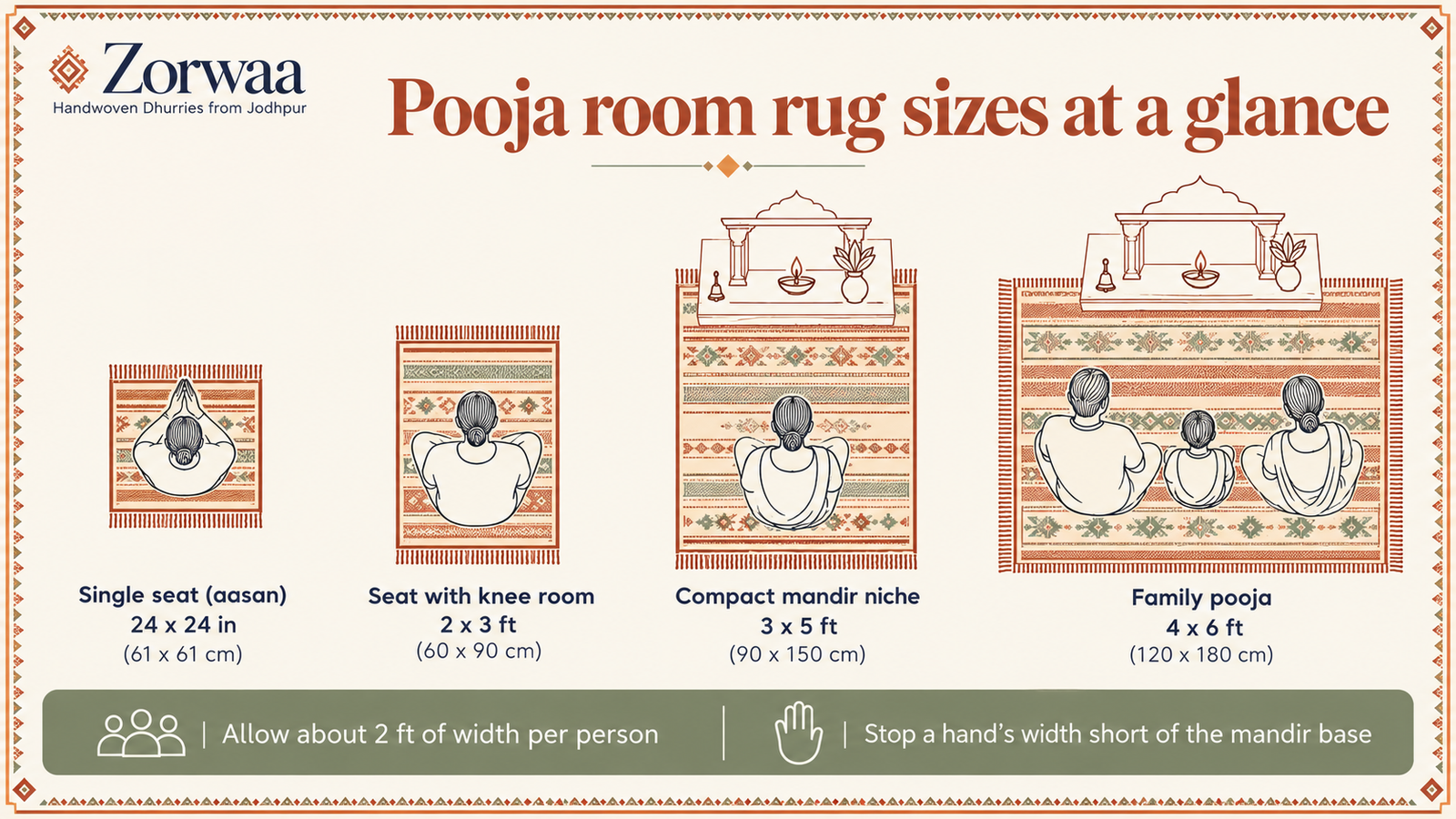
Start by measuring the clear floor in front of the mandir, then size the rug to the number of people who sit there and for how long. A useful rule is about 2 feet (60 cm) of width per person when sitting cross-legged.
For a single seat, 24 by 24 inches is the traditional aasan. If you sit with your knees wide or kneel, go up to 2 by 3 feet (60 by 90 cm) so nothing slips off the edge.
A compact mandir niche usually suits 3 by 5 feet (90 by 150 cm). That seats two people side by side with room for a puja thali. For a family pooja with three or four people in a row, 4 by 6 feet (120 by 180 cm) works, with the 6 feet running across the room.
Two small margins make a difference. Stop the rug about a hand's width short of the mandir base, so wax and ghee fall on stone rather than wool. And leave a few inches of bare floor to the walls and doorway, so the edges do not ride up or catch on the door.
Pooja spaces are rarely standard shapes. Under-stair mandirs, corner alcoves and narrow passages are common, and no ready size fits them well. In those cases a custom rug made to your exact measurements is a sensible route. Shape is not a limit either: we can weave curves, L-shapes and irregular outlines.
The Best Fibres For A Pooja Or Meditation Rug
Cotton and wool are the safest choices. Jute and synthetics need more thought.
Cotton is cool, flat and easier to wash, which makes it the practical pick for a seat that meets turmeric, kumkum and petals every day. It is also lighter, so on a smooth floor it needs something underneath to keep it still.
Wool is warmer underfoot, and you will notice that on cold marble in a North Indian winter. It is denser, holds its shape, and is harder to ignite than cotton, though no natural fibre is fireproof, so the flame rules below still apply. Wool is heavier to wash, which means spills need quicker attention.
Jute is rough on bare knees and sheds fibre. It makes a decent outer rug in a pooja room where people mostly stand and walk, but we would not use it as the seat.
Synthetic velvet and polyester mats are the cheap default for aasans. They tend to be slippery, they hold heat and static, and they melt instead of charring if a spark lands. Fine as a spare, but not what we would sit on every day.
Colour And Pattern That Hold Up To Daily Use
Choose a mid-tone, patterned flatweave over a pale solid. Turmeric, kumkum, sandalwood paste and ghee all show on cream or ivory within a week, while stripes, diamonds and other geometric patterns break up the odd mark. Earthy reds, indigos, olives and deep ochres are forgiving.
Pattern has a second job here. Many families prefer not to have deity images or sacred symbols on anything feet touch, and geometric dhurrie designs sidestep the question. Your household's own practice should decide this, so check with the elders if you are unsure.
If direction and colour matter in your home, our Vastu guide to rug colours and placement goes through them room by room.
What To Avoid
Avoid anything thick, slippery or fussy to clean.
Shag and high-pile rugs trap wax, ash and petals, and they make an unsteady seat. Glossy velvet slides on marble. A flatweave has no backing and can creep on polished stone, so put a thin non-slip underlay beneath it.
Flame deserves its own rule. Set diyas and incense on a metal or stone plate, never straight onto the rug. Keep long fringes and loose tassels away from the lamp, and never leave a lit diya unattended on or near any rug, whatever the fibre.
Also skip anything that can only be dry cleaned. In a pooja room, a rug you cannot spot-treat at home turns into a worry.
Products You May Like
-50%
Select options
This product has multiple variants. The options may be chosen on the product page
Cotton Panja Dhurrie Rug for Living Room Floor Decor, Handmade
₹3,800.00 – ₹64,800.00Price range: ₹3,800.00 through ₹64,800.00-50%
Select options
This product has multiple variants. The options may be chosen on the product page
Cotton Panja Dhurrie Rug for Living Room Seating Space
₹3,800.00 – ₹64,800.00Price range: ₹3,800.00 through ₹64,800.00-50%
Select options
This product has multiple variants. The options may be chosen on the product page
Cotton Panja Dhurrie Rug for Living Room, Handwoven Flatweave
₹3,800.00 – ₹64,800.00Price range: ₹3,800.00 through ₹64,800.00-51%
Select options
This product has multiple variants. The options may be chosen on the product page
Modern Brown Wool Dhurrie Rug | Handmade Flatweave Area Rug | Neutral Home Decor
₹2,399.00 – ₹43,200.00Price range: ₹2,399.00 through ₹43,200.00Rugs For Small Flats And Meditation Corners
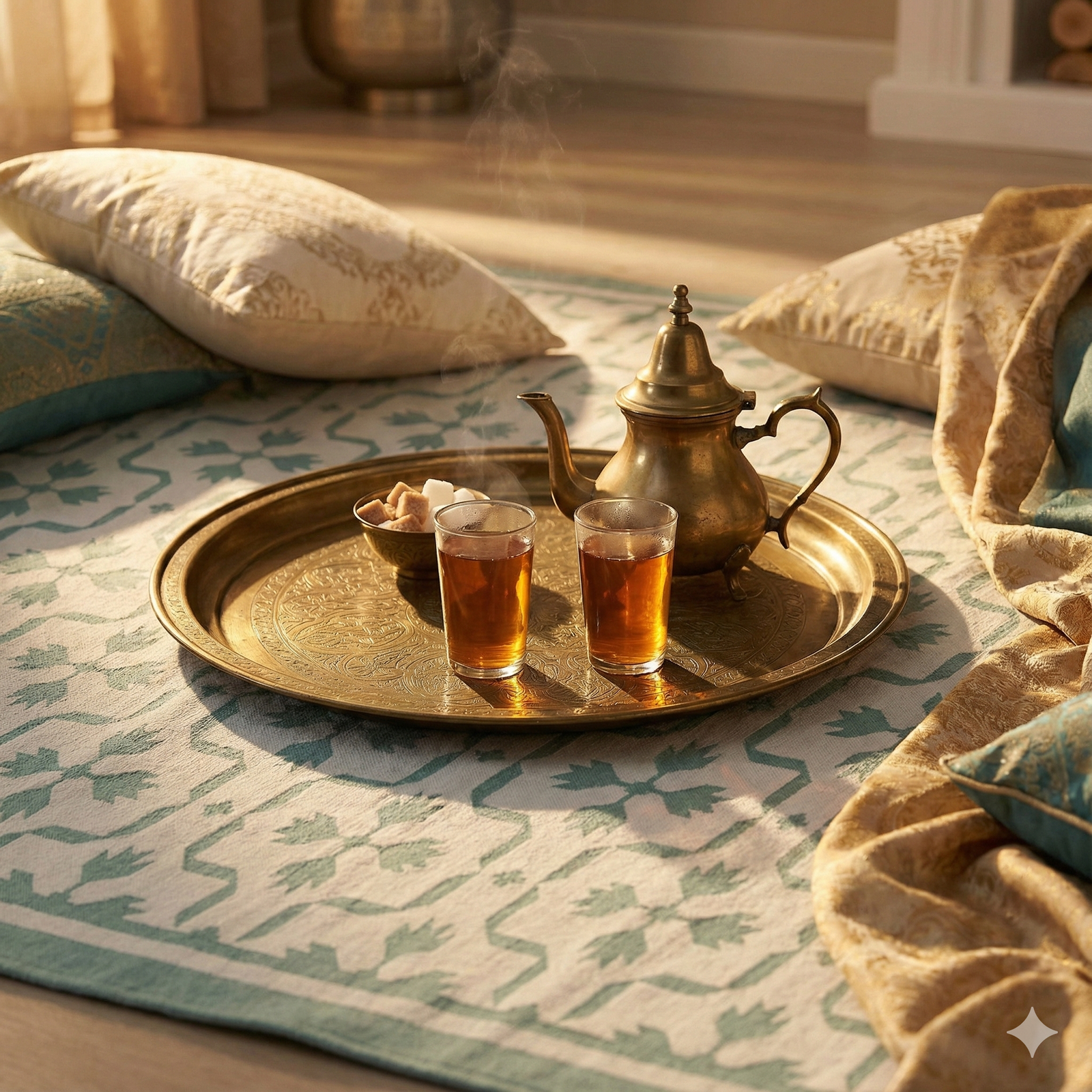
Not every home has a separate pooja room. In a flat, the shelf often sits in a living room or hallway corner, and the rug has to share the space. A small flatweave in front of the shelf marks the spot, and its thin profile means doors and cupboards still open over it.
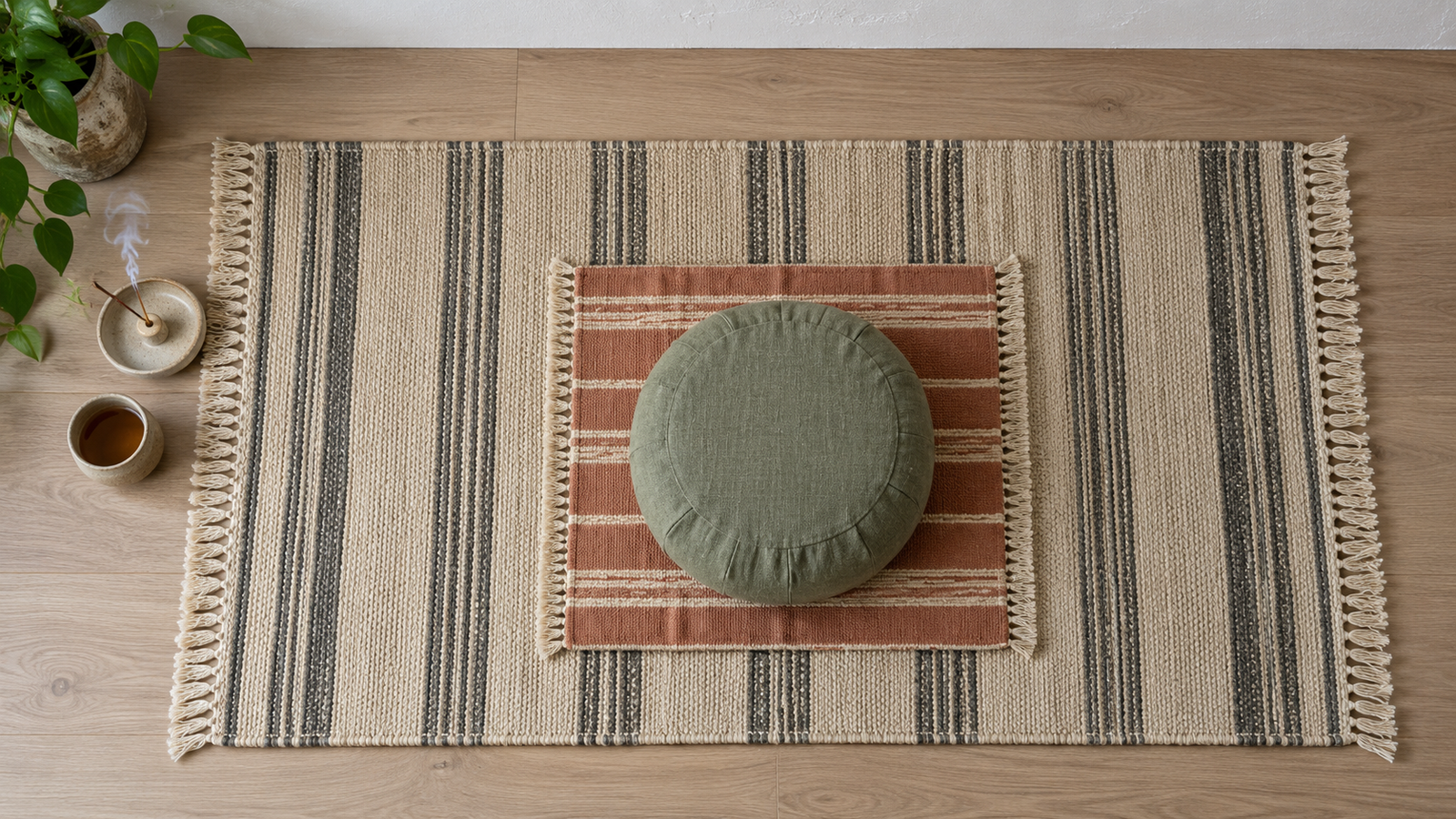
A prayer or meditation corner with no flame needs less than people expect. A 3 by 5 foot rug, a cushion and a clear wall are enough. If you want something that takes the spills, lay a small washable cotton aasan on top of a larger rug and wash the aasan on its own. The bigger rug stays clean and the daily mess has somewhere to land.
How To Look After Pooja Room Rugs
Act on spills early and keep the method gentle. Wool and cotton both react badly to heat and hard scrubbing.
Take wax first. Let it set hard, or hold an ice pack on it for a few minutes, then lift the lump off with a blunt edge such as an old card. Skip the hot water, and do not reach for an iron on wool. Any residue left behind is a job for a professional cleaner.
For turmeric and kumkum, blot and do not rub. Use cold water with a drop of mild soap, and test it on a hidden corner first. Turmeric is among the most stubborn natural dyes, so on a pale rug you may only lighten the mark. That is one more reason to pick a mid-tone.
Ash, petals and dust shake out or vacuum off. Flatweave rugs are reversible, so turning yours over now and then evens out the wear. Full washing and drying steps are in our guide to cleaning a dhurrie at home.
Quick Checklist Before You Buy
- Measure the clear floor in front of the mandir and allow about 2 feet of width per person.
- Pick cotton for easy cleaning or wool for warmth. Keep jute for standing areas.
- Choose a mid-tone, geometric or striped pattern.
- Stop the rug a hand's width short of the mandir base.
- Add a thin non-slip underlay on marble or tile.
- Keep flames on a metal or stone plate, away from fringe.
- Ask about care instructions, so you know what can be spot-cleaned at home.
Frequently Asked Questions
What size rug is best for a pooja room?
For most home mandirs, 3 by 5 feet (90 by 150 cm) is a good starting size, and 4 by 6 feet (120 by 180 cm) suits a family sitting three or four across. A single seat is about 24 by 24 inches (61 by 61 cm). Allow roughly 2 feet of width per person and measure the clear floor before you order.
Is cotton or wool better for a pooja room rug?
Cotton is easier to wash and cooler to sit on, so it suits daily use. Wool is warmer on cold marble and denser underfoot, but spills need faster attention. Both work in handwoven flatweave, so choose by climate and by how often you plan to clean.
Can I use a normal rug in a pooja room?
Yes, if it is low in pile, stays put on the floor and can be cleaned at home. A thick shag or a glossy synthetic is a poor fit, because wax, ash and slipping all become problems. Flatweave is the easiest type to live with.
Should a pooja room rug have religious symbols on it?
Many families prefer not to put deity images or sacred symbols where feet and shoes touch, and choose geometric or plain patterns instead. It is a household decision, so follow your family’s practice.
What is the best rug for a meditation corner?
A low-profile flatweave of about 3 by 5 feet (90 by 150 cm), with a cushion for longer sits. A single aasan of 24 by 24 inches (61 by 61 cm) is enough for one person. Natural fibres keep the surface calm and breathable.
A pooja room or prayer corner does not need an expensive rug. It needs the right size, a fibre that suits your climate and a pattern that forgives turmeric. If you are refreshing the space before Diwali, browse our pooja room rugs, and ask any seller about lead times before you order, especially for custom sizes.