
Uncategorized

Meet the Weavers of Bishnoi Village: The Families Behind Every Zorwaa Rug

A traditional weaving workshop courtyard in rural Rajasthan with looms and finished dhurries

The weavers of Bishnoi Village, and specifically the neighbouring village of Salawas, are where every Zorwaa dhurrie begins. Weaving here isn't a trend or a side hustle, it's simply what parts of this community have done for generations, on horizontal looms set up in courtyards and workshops that have looked more or less the same for a very long time. This post is about that place and that craft, the technique, the community that carries it, and the pressures it's genuinely up against, rather than a polished, generic version of "artisans in India make our rugs." If you want the fuller geography of the region, our guide to Bishnoi Village and Salawas covers that ground. This one stays closer to the loom.

Table of Contents

Where This Story Is Rooted

Salawas sits about 20 kilometres from Jodhpur, in Luni tehsil, and it's often described locally as the weavers' village within the wider Bishnoi area, a cluster of communities known across Rajasthan for their deep, centuries-old relationship with the land and its resources. The Bishnoi are known well beyond the region for their environmental principles, protecting trees and wildlife as a matter of faith rather than policy. Weaving grew up alongside that same ethic of using what the land and its animals genuinely provide, wool, cotton, camel and goat hair historically, worked by hand into something durable enough to last.

That connection between craft and environment isn't incidental to how we think about materials either. A community that treats natural resources with this much care is, unsurprisingly, also the source of rugs made entirely from wool, cotton and jute rather than synthetic fibre. It's less a marketing decision on our end and more a reflection of where and how these rugs have always been made.

Durrie weaving specifically in Salawas is documented back to at least the mid-nineteenth century, and local tradition in the village traces it back considerably further than that. Either way, it's not a craft that arrived recently. Camel and goat hair were once common materials too, sourced from herds many weaving families kept themselves, though cotton has become the dominant fibre in more recent generations, valued for being lighter to work with and easier to source consistently at scale.

A Craft Passed Hand To Hand

The weaving in Salawas has traditionally been carried by the Prajapat community, passed from father to son for generations, and increasingly now to daughters as well, a shift worth noting rather than glossing over. Whole families would once be involved, spinning, dyeing and weaving as a shared household undertaking rather than one person's individual trade.

That structure still shapes how the craft works today. A dhurrie on a Salawas loom is rarely the work of just one pair of hands, one family member might prepare the yarn, another sets up the warp, another weaves the pattern itself. What looks like a single finished rug usually represents several people's contribution across several days or weeks, which is part of why a handwoven dhurrie takes real time to make, and why that time is exactly what you're paying for.

The Panja: A Tool As Old As The Craft

The technique used in Salawas has a name of its own: panja weaving, named for the panja, a claw-shaped metal comb used to beat each new row of weft tightly against the ones before it. We touched on this term briefly in our kilim vs dhurrie post, it's worth explaining properly here, since it's specific to this region and not widely practised elsewhere in the world.

The panja is what gives Salawas dhurries their characteristic density and the sharp, clean edges you see in the geometric patterns the region is known for. It's a slower, more physically demanding technique than a purely mechanical loom would ever need, and it's a large part of why these dhurries hold their shape and structure for years rather than flattening out quickly under regular use.

Close-up of a panja weaving tool being used on a traditional horizontal loom in Rajasthan

A Craft Holding On Against Real Pressure

It would be easy to write this section as pure romance, generations of tradition, timeless skill, and stop there. The more honest picture is that this craft is genuinely under pressure. Machine-made rugs are cheaper and faster to produce, and fewer young people in weaving families are choosing to continue the trade, often for the same reasons skilled trades lose ground everywhere, the income doesn't always compare to other options once a family has access to formal education and city jobs.

The number of households in Salawas still actively weaving durries by hand has fallen noticeably over recent decades. The ones who continue do so with real skill and, often, real pride in a craft that connects them to their family's history, but pride alone doesn't pay for it. That's really the honest context behind why buying handwoven matters here, not as a marketing line, but as a fact about what keeps a loom running.

Why Buying Direct Matters Here

This connects to something we've written about elsewhere on this blog: the gap between what a weaver is paid and what a showroom eventually charges can be significant, sometimes two to three times the original cost by the time a rug changes hands a few times over. For a craft that's already under economic pressure, that gap is the difference between a fair wage for real, time-intensive skill and a family deciding the trade isn't worth passing on to the next generation.

Working directly with weaving families in Bishnoi Village and Salawas isn't just a supply chain choice for us, it's the part of this business that actually determines whether this specific craft has anyone left to practise it in another twenty years.

What This Story Looks Like Right Now

We'd like this post to eventually carry actual names, actual voices, specific families and the specific rugs they've made for us. Right now, it's an honest account of the community and craft behind every piece rather than individual profiles, because that's what we can stand behind accurately today. As those relationships and conversations deepen, this is a page we plan to keep building rather than one we're calling finished.

Zorwaa infographic showing the stages of handwoven dhurrie making in Bishnoi Village and Salawas

Frequently Asked Questions

Both sit around 20 kilometres from Jodhpur, Rajasthan, in Luni tehsil. Salawas is often described locally as the weavers’ village within the broader Bishnoi region.

A traditional flatweave technique specific to this region, named for the panja, a claw-shaped metal comb used to pack each row of weft tightly against the warp, producing a dense, durable weave with sharp geometric edges.

Yes. Every dhurrie is woven directly with artisan families in Bishnoi Village and Salawas, without the layers of distributor and showroom margin that a multi-brand retail model typically adds.

It’s genuinely under pressure. Fewer households in weaving communities like Salawas practise it by hand than a few decades ago, largely due to competition from machine-made rugs and shifting economic opportunities for younger generations. The weavers who continue do so with real, sustained skill.

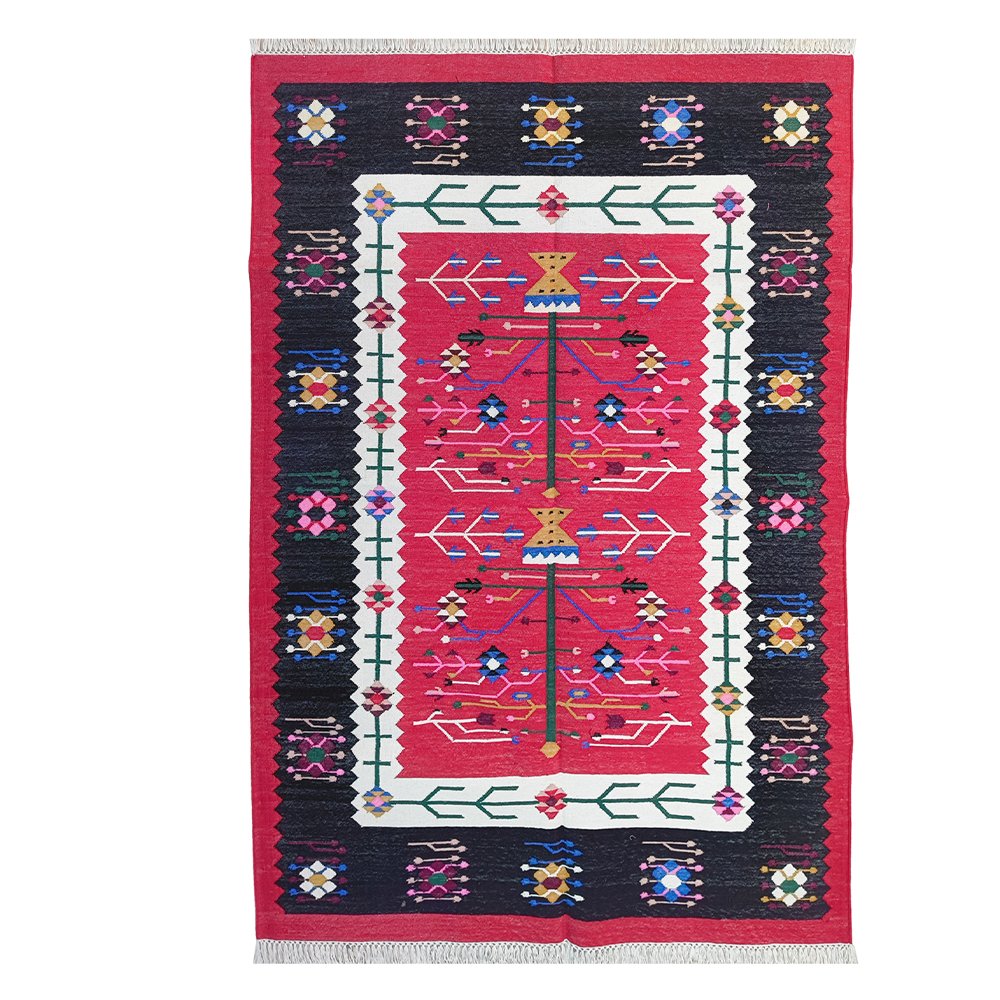
A Zorwaa dhurrie carries more of this story in it than a product photo can really show, the loom, the panja, the family, the choice to keep weaving when plenty of easier options exist. If the craft itself interests you as much as the finished rug, our guide to traditional Rajasthani patterns is a good next read, or browse the traditional collection to see the weaving discussed here up close.