
Vastu Tips for Rugs: Best Colours & Placement for Every Room

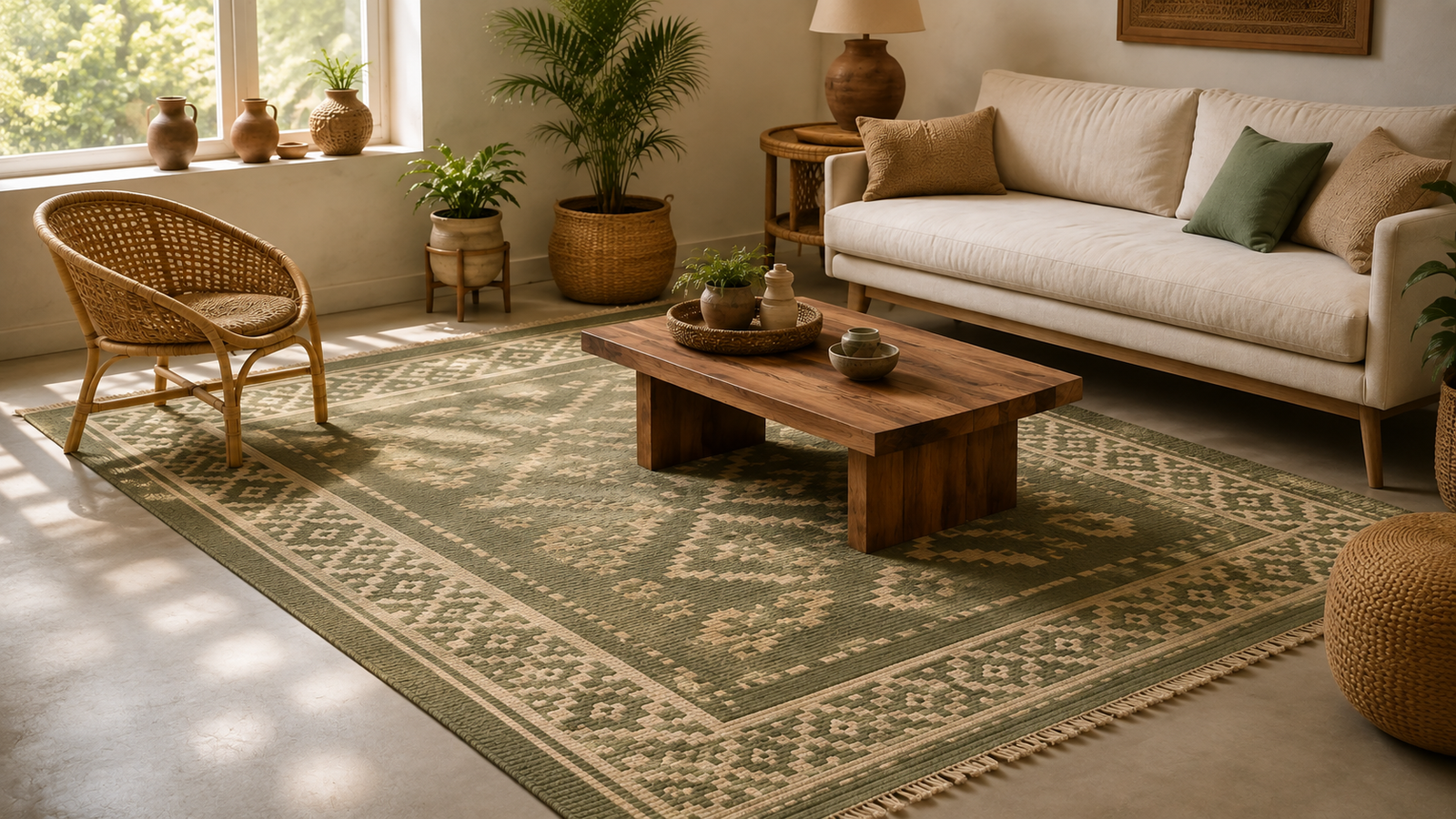
If you've ever stood in a rug store scrolling through colour options and wondered whether the shade under your feet actually matters beyond decor, you're not alone. In many Indian homes, choosing a rug isn't just about matching the sofa. It's part of a much older conversation about how a home feels and functions, one that Vastu Shastra has shaped for centuries. These vastu tips for rugs cover the colours, materials and placement rules that Vastu associates with each room, from the living room where guests gather to the pooja corner where the day often begins. You don't have to follow every rule to the letter. But if you're already choosing a handmade dhurrie for its craft and durability, it costs nothing to pick a colour that also works with the direction your room faces.
Table of Contents
What Vastu Shastra Says About Rugs And Floors
Vastu Shastra treats a home as a field of directional energy, with north, south, east, west and the four in-between points each governed by one of five elements: earth, water, fire, air and space. Floors sit at the base of this system. A rug sits right between your feet and that floor, so Vastu counts it as one of the more direct ways to work with a room's energy, right alongside wall colour and furniture placement.
This is why the same rug can feel right in one room and wrong in another. A deep red dhurrie might suit a pooja corner in the northeast and feel out of place in a south-facing bedroom. Colour, direction and room function get read together here, not on their own.
Why Material Matters As Much As Colour
Colour gets most of the attention, but Vastu texts are just as specific about material. Wool, cotton, jute and silk carry the grounding quality a floor covering is meant to provide. Wool especially gets singled out as the strongest option for stability, a big reason so many pooja room and bedroom rugs in traditional Indian homes are wool or wool-cotton blends. Synthetic fibres rarely make the cut in vastu-aligned advice, whatever the colour on top.
This happens to line up with how every Zorwaa dhurrie gets made. Nothing in our core range uses synthetic filling. Our weavers in Bishnoi Village and Salawas work in wool, cotton and jute the same way their families always have, so a vastu-conscious buyer isn't choosing between craft and correctness. Both come from the same loom.
Vastu Colours For Rugs, Room By Room
Direction matters more than the room label itself, but here's how the two usually line up in a typical Indian home.
Living room
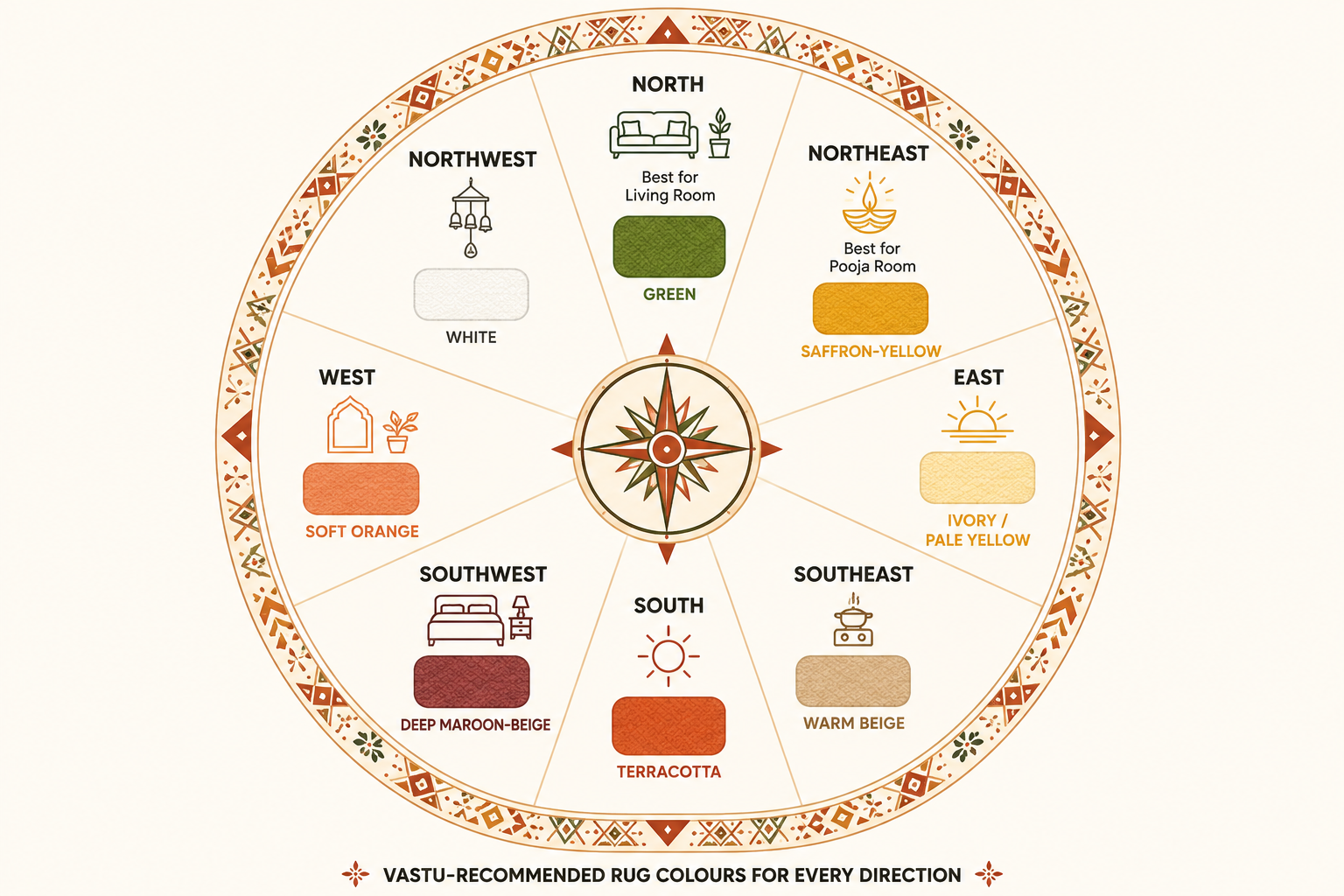
Most living rooms face east or north, both of which Vastu rates as good directions for a gathering space. For an east-facing room, lighter tones work best: ivory, cream, pale yellow or soft green, echoing the direction's association with early morning light. North-facing living rooms lean toward blue, green or white, since north is linked to Kuber, the deity of wealth, and green especially carries a growth association.
If your living room faces south or west instead, warm earth tones such as terracotta, warm beige or soft orange tend to sit better than cool shades. Vastu advises against very dark or black rugs in south-facing rooms too, since the direction is already tied to heavier, more grounding energy.
Bedroom
Bedrooms are usually mapped to the southwest zone, which Vastu connects to stability and rest. Rugs placed under or around the bed in earthy tones, beige, soft maroon or deep green, work with that stillness instead of against it. Bright or heavily patterned rugs are better saved for more active rooms, since a bedroom is supposed to slow the day down, not add more noise to it.
Pooja room
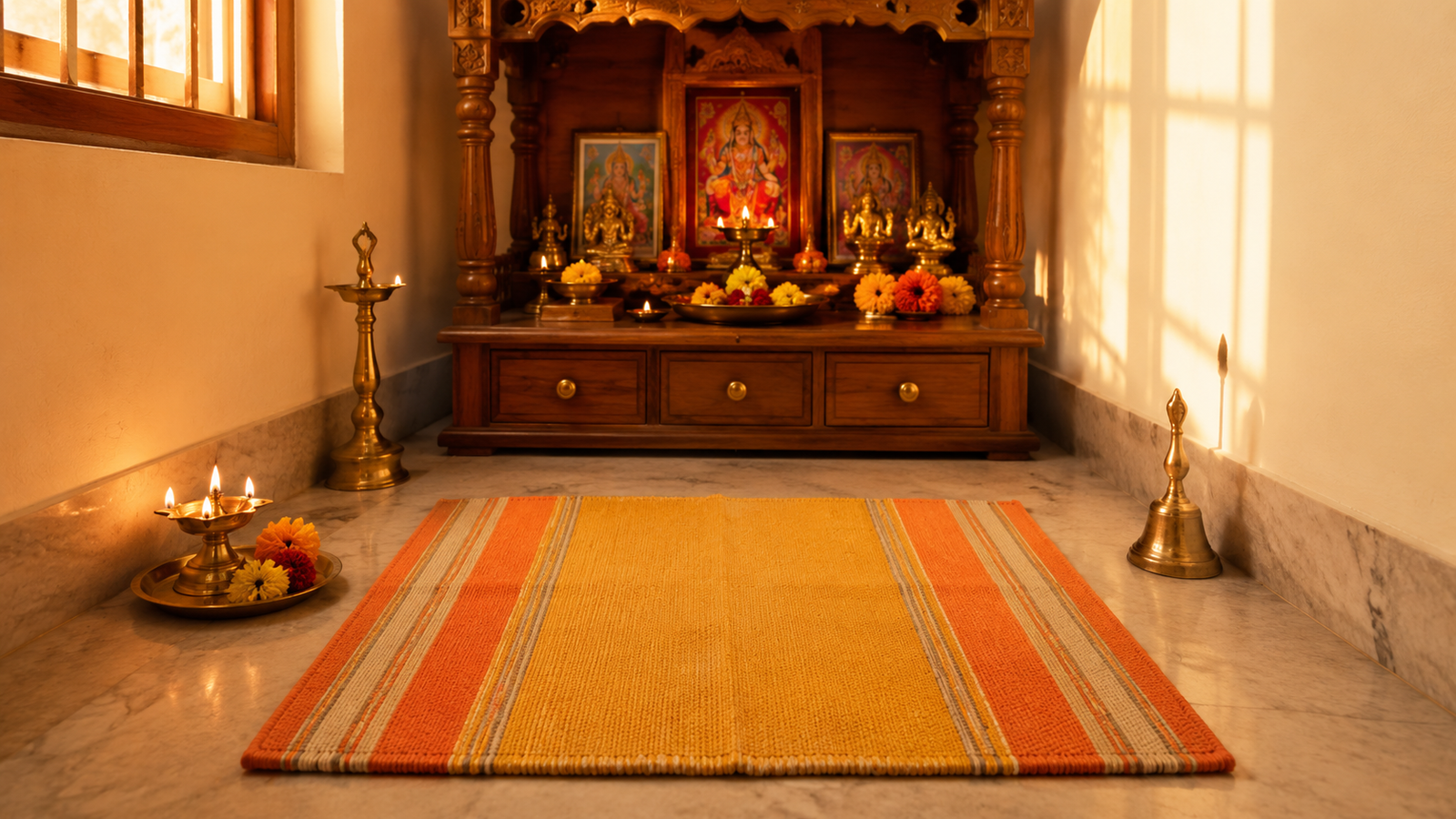
The pooja room gets the most specific guidance of any space in the house, and it's worth paying attention to if this is where your day starts. Vastu places the ideal pooja space in the northeast corner, governed by fire and purification, and calls for yellow, saffron or red on the mat or small rug used there. Material matters more here than almost anywhere else: wool, cotton or silk are fine, but synthetic backing is specifically discouraged for a sacred space.
Size matters too. A small mat sized to the altar area works better than a large rug covering the whole room, and it should sit facing the deity rather than off to one side. One detail people miss: the northeast corner of the home overall is meant to stay light and uncluttered, so this isn't the spot for heavy furnishings stacked on top of a pooja rug.
Dining room
Dining spaces stay fairly simple in Vastu terms. A rug placed centrally under the table, or toward the west of the room, is meant to support family harmony. Stick to grounded, uncomplicated tones and symmetrical patterns over busy prints, and keep the rug easy to clean, dining areas take a beating.
Study or home office
For a study or home office, Vastu favours colours that support focus without overstimulating: cream, pale yellow or soft green are the standard picks. Call them clarity-supporting shades if you like, but it's really just a more traditional way of saying what most people already know about calm, uncluttered workspaces.
Children's room
Children's rooms follow similar logic. Soft yellow, light blue and green come up again here as nurturing, growth-supporting shades, while dark brown or red are usually advised against. If your child's room doubles as a play area, a flatweave dhurrie in one of these shades also happens to be easier to spot-clean than a pile rug, a practical bonus regardless of what you believe about energy flow.
Placement Rules Worth Knowing Beyond Colour
Colour is only half the picture. A few placement habits come up across almost every Vastu source, regardless of which room you're furnishing.
Keep rugs clean and free of dust. A worn or dusty rug signals stagnant energy, which rather defeats the purpose of picking an auspicious colour in the first place. Skip torn or fraying rugs at the entrance especially, since the front door is where energy is meant to enter the home cleanly. Symmetrical, balanced patterns win out over scattered ones too, one reason traditional dhurrie motifs with centred medallions or repeating borders show up so often in this kind of guidance. And the northeast corner of the house as a whole should stay open and lightly furnished, so it's not the spot for an oversized statement rug.
A Few Vastu Mistakes People Make With Rugs
A few habits are worth reconsidering if you're buying with Vastu in mind.
Choosing a rug purely by what's trending and ignoring which way the room faces is the most common one. Direction matters as much as the shade itself. Picking synthetic materials for a bedroom or pooja room is another, since Vastu specifically favours natural fibres for spaces meant for rest or worship. And very dark, busy or heavily printed rugs are usually discouraged across the board, not because dark colours are "bad," but because Vastu wants a floor to feel settled rather than visually loud.
Quick Vastu Tips For Rugs To Remember
- Match colour to the direction your room faces, not just your decor style
- Choose wool, cotton, jute or silk over synthetic materials
- Keep pooja room rugs small, natural fibre, and facing the altar
- Avoid dark, busy or torn rugs near the entrance
- Leave the northeast corner of the home light and uncluttered
- When in doubt, pick earthy or muted tones over bright synthetic dyes
Frequently Asked Questions
Which colour rug is best for the living room as per Vastu?
It depends on which way the room faces. Light, bright tones suit east-facing rooms, blue, green or white suit north-facing rooms, and warm earth tones work better for south or west-facing living rooms. Black or very dark rugs are best avoided in south-facing spaces.
Can I use a wool rug in the bedroom according to Vastu?
Yes. Wool is considered one of the most grounding materials in Vastu and works well for the southwest-oriented bedroom zone, especially in earthy tones like beige, maroon or deep green.
What colour rug is right for a pooja room?
Yellow, saffron or red, in a natural fibre such as wool, cotton or silk, sized to the altar rather than the whole room, and placed in the northeast corner facing the deity.
Does Vastu really affect rug choice, or is this just tradition?
Vastu Shastra is a traditional belief system rather than a scientifically tested one, and how closely you follow it is a personal choice. Many Indian households treat it as a serious part of home design, while others use it more loosely as a starting point for colour and placement. Either way, sticking to natural, well-made materials tends to hold up regardless of which camp you’re in.
Whether you follow Vastu closely or just like the idea of a rug that suits its room, the fundamentals stay the same: natural fibre, honest colour, and a weave that's built to last. Every dhurrie in Zorwaa's collection is handwoven in Bishnoi Village and Salawas from wool, cotton or jute, which makes matching a vastu-friendly colour to your space one less thing to compromise on. Browse living room rugs or explore our play room collection to find one for yours.
One thought on “Vastu Tips for Rugs: Best Colours & Placement for Every Room”
Comments are closed.