

What Size Rug Do You Need for a Dining Table? A Buying Guide

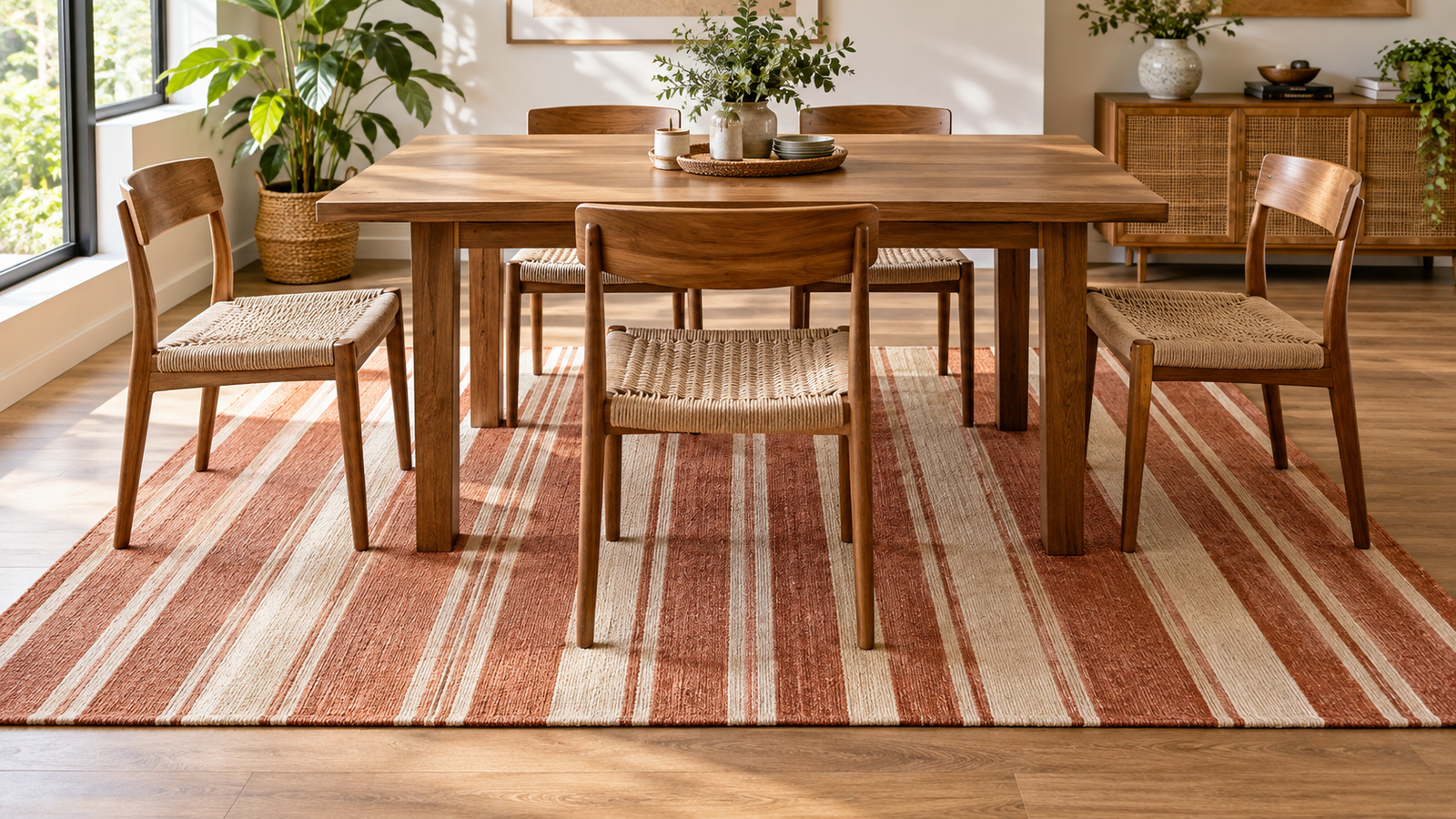
What size rug for a dining table do you actually need? The short answer: your rug should extend 24 to 30 inches beyond the edge of the table on every side where a chair sits, so guests can pull their chair back without a leg sliding off the edge. That's the rule of thumb behind almost every dining rug recommendation you'll find, but the exact number depends on your table's shape, size and how many chairs you're actually seating. This guide walks through standard sizing by table type, what to do when your table doesn't match a standard chart, and why the material under a dining table matters just as much as the size does.
Table of Contents
The 24-To-30-Inch Rule, And Why It Exists
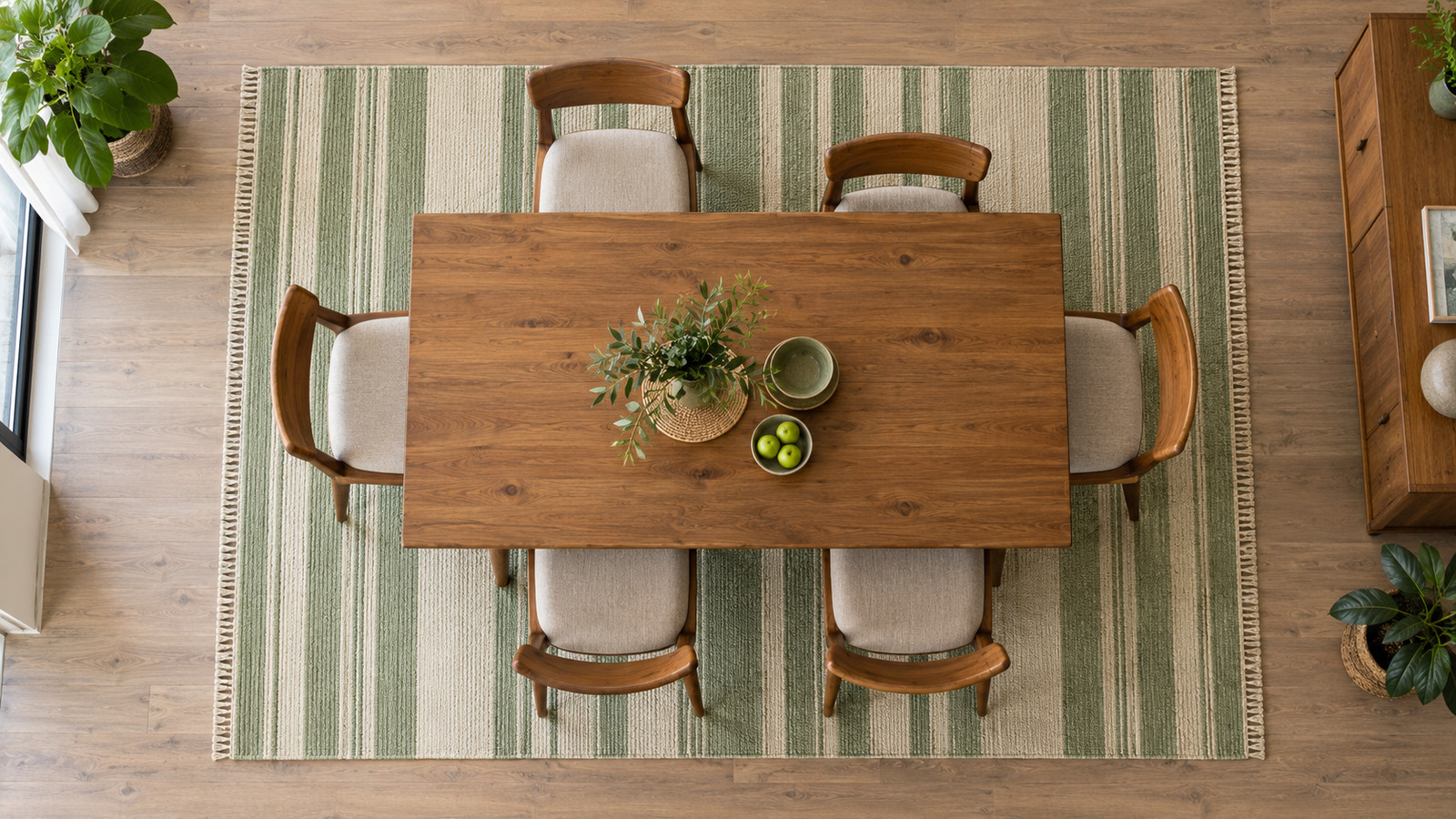
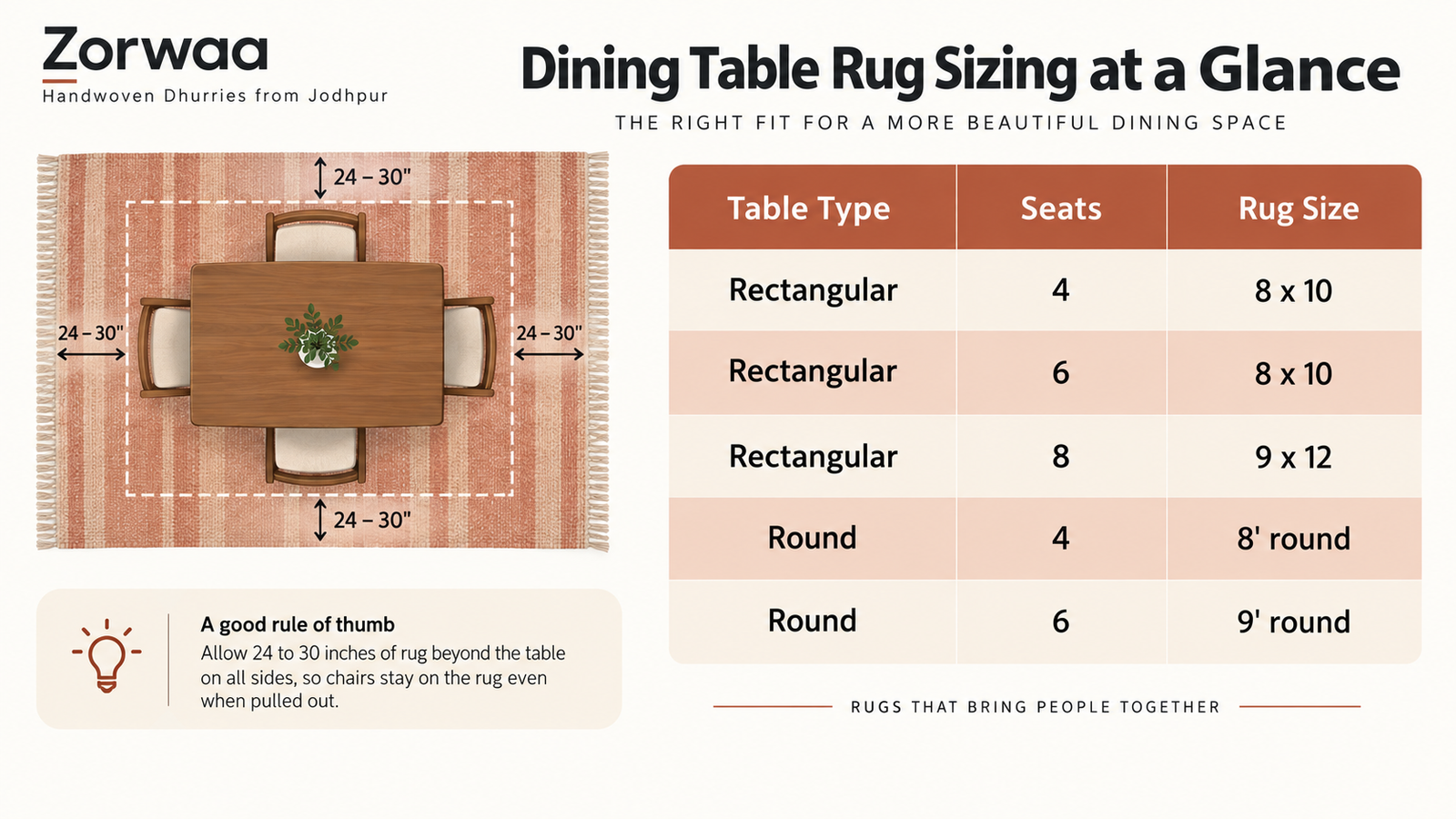
The number itself comes from how much room a chair actually needs once it's pulled away from the table for someone to sit down. A pulled-out chair typically needs 18 to 24 inches of clearance behind the table edge to the point where someone can comfortably sit, and adding a further buffer beyond that gets you the standard 24 to 30 inch margin most sizing guides recommend on every side.
The practical test is simple: every chair leg should still be resting on the rug when it's pulled all the way out, not just when it's pushed in under the table. A rug that only covers the table itself, with chairs spilling off the edge onto bare floor, is the single most common dining room sizing mistake, and it looks unfinished even in an otherwise well-decorated room.
Rug Size By Table Shape And Seating Count
Here's how table size and seating typically translate to rug size, treating these as a starting point rather than an absolute.
Table Shape | Table Size | Seats | Recommended Rug Size |
Rectangular or oval | Up to 60" long | 4 | 6x9 or 8x10 |
Rectangular or oval | 72" to 84" long | 6 | 8x10 |
Rectangular or oval | 90" to 108" long | 8 | 9x12 |
Rectangular or oval | 108"+ long | 8 to 10+ | 10x14 |
Round | 42" to 48" diameter | 4 | 8' round |
Round | 54" to 60" diameter | 6 | 9' round |
Square | Matches table width | Varies | Square, or a slightly oversized rectangular rug |
An 8x10 under a 6-seat rectangular table is the single most common pairing you'll come across, worth knowing if you want a quick default rather than working through the full table.
Matching Rug Shape To Table Shape
The safest pairing is matching shapes, a rectangular or oval table under a rectangular rug, a round table under a round rug. This keeps the clearance even on every side rather than leaving awkward gaps at the corners or overhang in the middle.
Square tables are the one exception worth knowing about. A square rug is the obvious match, but a slightly larger rectangular rug also works well under a square table, particularly in a rectangular room where the extra length helps the rug relate better to the room's proportions rather than just the table sitting on it. There's no hard rule against mixing shapes here, as long as the clearance stays even on the sides where chairs actually sit.
What If Your Table Sits Against A Wall
If one side of your table is pushed against a wall, banquette seating or a built-in bench, you only need the full 24 to 30 inch clearance on the sides where chairs actually pull out. The wall side can sit right at the rug's edge, or even slightly beyond it, since nothing needs to slide back there. This can shave a size down from what the standard chart suggests, worth factoring in before you default to the largest option.
Why Flatweave Works Especially Well Under A Dining Table
Material matters as much as size in a dining room specifically, since this is one of the highest-mess, highest-friction spots for a rug in the whole house. A thick pile rug traps crumbs and spilled food deep in the fibre, and chair legs dragging across a plush pile wear a visible path faster than almost anywhere else. Our flatweave versus pile guide covers the fuller construction comparison if you want the complete picture.
A flatweave dhurrie handles both problems better by construction. There's no deep pile for crumbs to disappear into, spills sit on the surface where they're easy to blot up, and a flat, tight weave lets dining chairs slide in and out smoothly instead of catching or dragging. Reversibility helps here too, a dining rug gets more wear than most, and being able to flip it once one side shows its age is a genuine practical advantage in exactly the room where a rug takes the most punishment.
A thin, breathable rug pad underneath is worth adding regardless of material, it stops the rug creeping out of place as chairs scrape in and out several times a day, which happens more in a dining room than almost anywhere else in the house.
When Your Table Doesn't Fit The Standard Chart
Standard sizing charts assume standard tables, and plenty of dining setups don't fit that mould. An extra-long farmhouse table, a custom live-edge piece, an oval table with unusual proportions, or a dining nook with built-in bench seating on one side can all fall outside what an off-the-shelf 8x10 or 9x12 comfortably covers.
This is exactly the situation custom sizing solves. Rather than rounding up to the next standard size and living with either too much bare floor or not quite enough chair clearance, you can specify the exact dimensions your table and room actually need before the rug is woven. For a dining room specifically, where the clearance math is less forgiving than in a living room, getting the size right matters more than it might elsewhere in the house.
Quick Size Reference Checklist
- Leave 24 to 30 inches of rug beyond the table edge on every side where chairs sit
- 6-seat rectangular tables pair most commonly with an 8x10 rug
- 8-seat tables typically need a 9x12
- Match rug shape to table shape, rectangular to rectangular, round to round
- A table against a wall needs clearance only on the open sides
- Flatweave construction handles dining-room mess and chair movement better than a pile rug
Frequently Asked Questions
What size rug do I need for a 6-seat dining table?
An 8×10 rug is the most common pairing for a standard 6-seat rectangular table, giving 24 to 30 inches of clearance on every side for chairs to pull out comfortably.
Should a dining room rug be round or rectangular?
Match your table’s shape. Rectangular or oval tables pair with rectangular rugs, round tables with round rugs. Square tables can work with either a square or a slightly larger rectangular rug.
How much bigger should a rug be than the dining table?
Extend the rug 24 to 30 inches beyond the table edge on every side where chairs sit, enough that a pulled-out chair’s legs stay on the rug rather than the floor.
What's the best rug material for under a dining table?
A flat, low-pile material works best. It doesn’t trap crumbs and spills the way a thick pile does, and it lets chairs slide in and out smoothly rather than catching or dragging.
Getting dining room rug sizing right comes down to one number, 24 to 30 inches of clearance beyond the table, applied to whichever shape and size table you actually have. If your table doesn't match a standard size, custom sizing is the more reliable fix than rounding up and hoping. Browse our dining room collection for flatweave dhurries built to handle exactly this kind of everyday use.