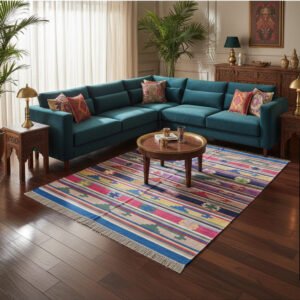
Most "traditional" rugs you find online are machine-made reproductions - printed designs on synthetic backing dressed up to look handwoven. The difference is obvious once you know what you're looking at: the back of a genuine handwoven rug shows the same pattern as the front, the edges are consistent but not perfectly even, and the texture has a density that synthetic alternatives simply don't produce.
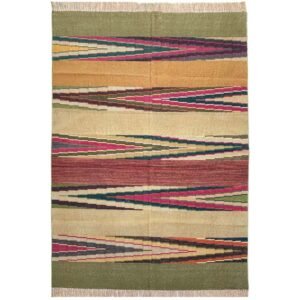
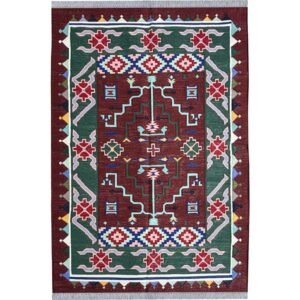
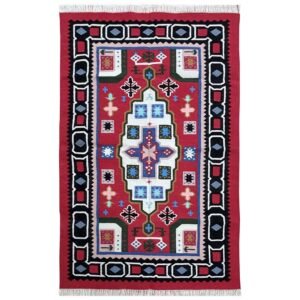
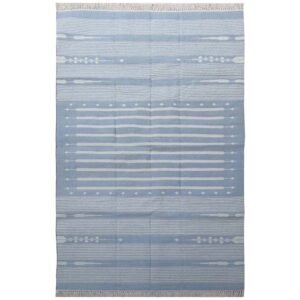
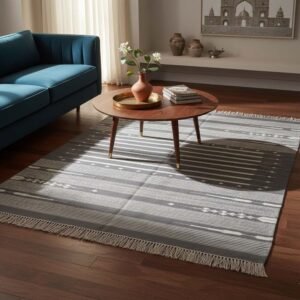
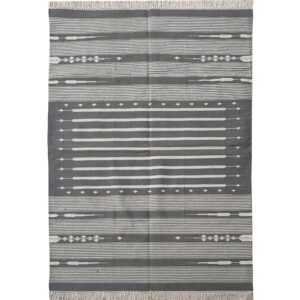
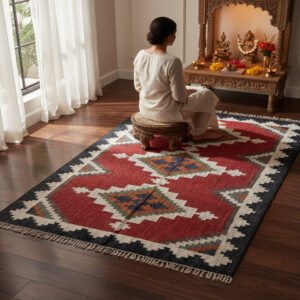
Every traditional rug and carpet in this collection is made on a loom by artisan weavers based in Bishnoi Village and Salawas, Jodhpur. These are communities with a long history in textile weaving - the craft was not learned from a manual, it was passed down from parent to child over generations. The designs you see in our traditional range carry that history in them. Geometric motifs, tribal patterns, kilim-style layouts, and classic dhurrie stripes - all woven by hand using natural fibres.
When you buy a traditional Indian carpet from Zorwaa, you're buying directly from the source. No middlemen, no inflated retail chain. The weaver who made your rug gets paid fairly and you get a better price for a better product.
The Craft Behind Traditional Rajasthani Rugs
Rajasthan has been at the centre of India's handwoven rug and carpet tradition for centuries. The Jodhpur region specifically, where our weavers are based is known for the panja weave and flatweave dhurrie techniques that produce tight, durable, reversible floor coverings.
The panja weave uses a comb-like tool to pack weft threads closely together on the loom. This creates a dense surface with clear pattern definition. Traditional Rajasthani dhurries made this way are heavy enough to sit flat without a rug pad, and they wear well under daily foot traffic for years.
Kilim-style rugs in this collection use a similar flatweave structure but with more complex interlocking weft work that allows for detailed geometric and tribal patterns. These are the rugs that interior designers and collectors specifically seek out when they want authentic Indian craftsmanship rather than a factory imitation.
Traditional Dhurrie Patterns - What the Designs Mean
The patterns you see on traditional Rajasthani dhurries are not random. Many of the motifs used by weavers in Bishnoi Village and Salawas have roots in local culture, tribal identity and the natural landscape of the Thar Desert region.
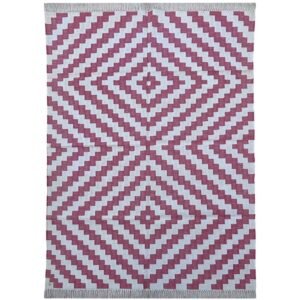
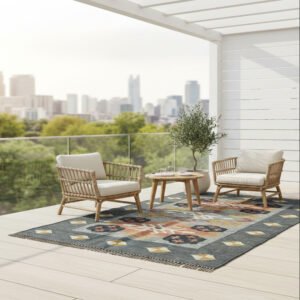
Geometric patterns with repeating diamonds and chevrons are among the oldest dhurrie motifs in Rajasthan. They predate any written record of the craft. Tribal stripe patterns in bold, contrasting colours reflect the weaving traditions of specific artisan communities. Floral motifs in traditional Indian rugs draw from the Mughal design influence that spread through Rajasthan's court crafts.
When you're choosing a traditional rug from this collection, the pattern you're choosing has a place in that history. It's not a design generated in software and printed onto polyester, it's a weave structure that someone built thread by thread.
Materials in Our Traditional Handmade Rug Collection
Wool jute blends dominate the traditional range for good reason. Jute gives the rug a natural, earthy texture and structural weight, while wool brings warmth, durability and the slight sheen that makes traditional patterns stand out. This combination is particularly popular with buyers in the US, UK and Europe who want a natural fibre carpet that holds up in living rooms and bedrooms without feeling thin.
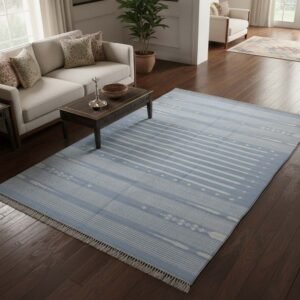
Cotton dhurries in the traditional collection are lighter and better suited to Indian homes and warmer climates. They're reversible, easy to clean, and the cotton takes natural dyes well so the colours in cotton traditional rugs tend to have more depth than synthetic alternatives.
All fibres are natural. No polyester, no synthetic pile, no chemical backing. The rugs are as clean in production as they are in design.
Kilim Rugs - A Traditional Style Within Our Collection
Several rugs in this category are kilim-style which is a flatweave construction technique used across Central Asia, the Middle East and the Indian subcontinent for centuries. Indian kilim rugs differ from Persian or Turkish kilims in their colour palette and motif structure, but share the same core flatweave method.
Our kilim rugs are made in Jodhpur using wool-jute blends with interlocking weft work that creates clean geometric patterns with no pile. They sit flat, look the same on both sides, and are particularly well suited to layering over larger plain carpets - a styling approach that's common in both Indian and Western interiors.
If you've been searching specifically for kilim rugs in India or Indian kilim carpets online, this collection has handmade options at a range of sizes and price points.
Custom Traditional Rug Design - Made to Your Specification
Need a traditional rug in a size that isn't in our standard range? Working with a specific colour palette for a room renovation? Want a traditional dhurrie pattern adapted to fit a custom dimension?
Our weavers in Jodhpur can produce any rug in this collection in a custom size. We also take requests for colour variations on existing patterns and adaptations of traditional motifs for specific interior design requirements. Fill in our customization form with your specification like dimensions, colour preferences and any design notes - and we'll come back to you within 24 hours with a quote and timeline. Most custom traditional rug orders are completed in 3-5 weeks.
Shipping Traditional Indian Rugs Across India and Internationally
We ship all traditional rugs and carpets across India with standard tracked delivery. International orders go to the US, UK, Europe, Australia and the Middle East. Traditional Indian rugs and dhurries are consistently among the top-exported home textiles from Rajasthan for good reason since the quality at this price point simply doesn't exist in most other markets.
Interior designers, hotels and commercial buyers sourcing traditional Indian carpets in bulk are welcome to contact us directly for B2B pricing and lead time discussions.